Thanks to the Lutheran Immigrant and Refugee Service for circulating this letter.
July 30, 2009.
Support S. 1549, the Protect Citizens from Unlawful Detention Act, and S. 1550,
the Strong STANDARDS Act (Safe Treatment, Avoiding Needless Deaths, and
Abuse Reduction in the Detention System)
We, the undersigned organizations, urge you to support S. 1549, the Protect Citizens from Unlawful Detention Act, sponsored by Senators Gillibrand (D-NY), Kennedy (D-MA) and Menendez (D-NJ), and S. 1550, the Strong STANDARDS Act (Safe Treatment, Avoiding Needless Deaths, and Abuse Reduction in the Detention System), sponsored by Senators Gillibrand (D-NY) and Menendez (D-NJ). We represent a broad cross-section of religious, immigration, asylum/refugee, human rights, civil liberties and community groups from across the country. We call upon Congress to enact these important reforms that will ensure America’s most basic values of liberty, dignity and respect are protected for all those living on our soil.
Since 2005 the Department of Homeland Security Immigration and Customs Enforcement (ICE) has dramatically increased and intensified immigration enforcement, using ever increasing detentions as a poor proxy for reforming the immigration system. As a result of aggressive enforcement policies and insufficient protections in the system, U.S. citizens and lawful permanent residents have been mistakenly and unlawfully detained, mistreated by government agents, and deported, including at least one U. S. citizen who was deported to Mexico illegally. These troubling outcomes are a direct result of an immigration system that relies on blanket detention policies instead of targeted immigration enforcement.
With ICE detaining more than 300,000 people last year in a swollen detention system, and predicting over 440,000 individuals will be detained this year, the vast network of federal, state, local and private prisons fail to adequately provide for the basic needs of those detained by ICE. Lacking adequate process and judicial discretion, hundreds of thousands of ICE detainees, including the sick, children, pregnant women and asylum seekers, are funneled into a detention system that was not designed to handle the large numbers or the long term detentions that result from indiscriminate enforcement of unjust immigrations laws without much-needed reform. As a result, people arrested and detained by ICE are transferred across the country, far from their families and attorneys, asylum seekers spend months and sometimes years in detention, and at least 90 people have died in custody since 2003, including some in recent months.
Legislation is urgently needed to regulate and curb ICE’s sweeping and reckless enforcement actions, focusing immigration enforcement in a way that is targeted and calibrated, and detaining people only where necessary. Smart enforcement coupled with secure alternatives to custodial detention would increase efficiency in the system and could potentially save millions in detention costs and lawsuits by those wrongfully detained, deported or abused while in custody. We are heartened by Secretary Napolitano’s attention to issues surrounding conditions and medical care in immigration detention, and her appointment of Dr. Dora Schriro as Special Advisor on Detention and Removal Operations. We understand that Dr. Schriro is preparing a set of recommendations designed to address some of the most serious problems in the system, but also believe that changes need to come from Congress, delivered in a way that ensures consistency across administrations as well as proper accountability and oversight by Congress.
The Protect Citizens from Unlawful Detention Act would establish screening mechanisms so that vulnerable populations, such as children and pregnant women, and others who are swept up in immigration enforcement operations are considered for alternatives to detention. Screening mechanisms would also help prevent situations in which U.S. citizens are mistakenly placed into the immigration system. This bill would ensure that all people arrested or detained by ICE are advised of the right to access immigration counsel and are notified of the immigration charges against them. The right to know why one is being held, to retain and access counsel, and to be free from arbitrary detention are fundamental American values that reach back to the founding fathers.
The Strong STANDARDS Act (Safe Treatment, Avoiding Needless Deaths, and Abuse Reduction in the Detention System) would require DHS to provide access to adequate medical care, establish protocols when ICE transfers immigrants away from family and counsel, ensure access to functioning telephones inside detention centers, as well as many other improvements to conditions of detention. This bill also establishes an “alternatives to immigration detention” program that is more humane and cost-effective than penal-style detention, and more appropriate to the civil nature of immigration proceedings. These programs would ensure that people appear at immigration court hearings while also redirecting vulnerable populations such as pregnant and nursing women, the elderly and asylum seekers into cost-saving, community-based, non-custodial alternatives to detention.
[Please note: both bills define families with children as "vulnerable populations," qualifying them for expanded release, bond, and parole options, and limiting the use of detention and electronic monitoring for families.]
We commend Senators Gillibrand, Kennedy and Menendez for sponsoring these vital pieces of legislation at a time when fiscal responsibility and a return to the rule of law sit prominently on the list of priorities for a new administration and new Congress. Our Constitution guarantees all individuals in our country the right to due process, and we must ensure that immigration enforcement is conducted in a way that is fair, humane and cost efficient. The time for Congressional action to avoid more preventable deaths in immigration detention and more detentions and deportations of U.S. citizens is now.
Sincerely,
Border Ambassadors, East Williamston County Democratic Club, Las Americas Immigrant Advocacy Center, Texans United for Families, Welcoming Immigrants Network
Monday, August 3, 2009
Austin-American Statesman: Critics push for immigrant detention center to close
Thanks to the Liscano and Osborn for the article, but just to clarify... The Hutto Settlement required that Immigration and Customs Enforcement create and implement Family Residential Standards. The article is referring to the stipulations of In re: Hutto as "enforceable standards." Compliance with this long list of physical and operational changes was overseen by a magistrate at the federal court. The Family Residential Standards, however, are unenforceable and do not include third party or external oversight. The magistrate's final report reflects questionable compliance in a number of areas, even two years after the settlement. Needless to say, this worries us.
Critics push for immigrant detention center in Taylor to close
Enforceable standards, mandated by a federal court, are set to expire Aug. 29.
By Miguel Liscano, Claire Osborn
Sunday, August 02, 2009
Critics of an immigrant detention center in Taylor are stepping up efforts to shut it down as a court mandate for improved conditions at the facility is set to expire.
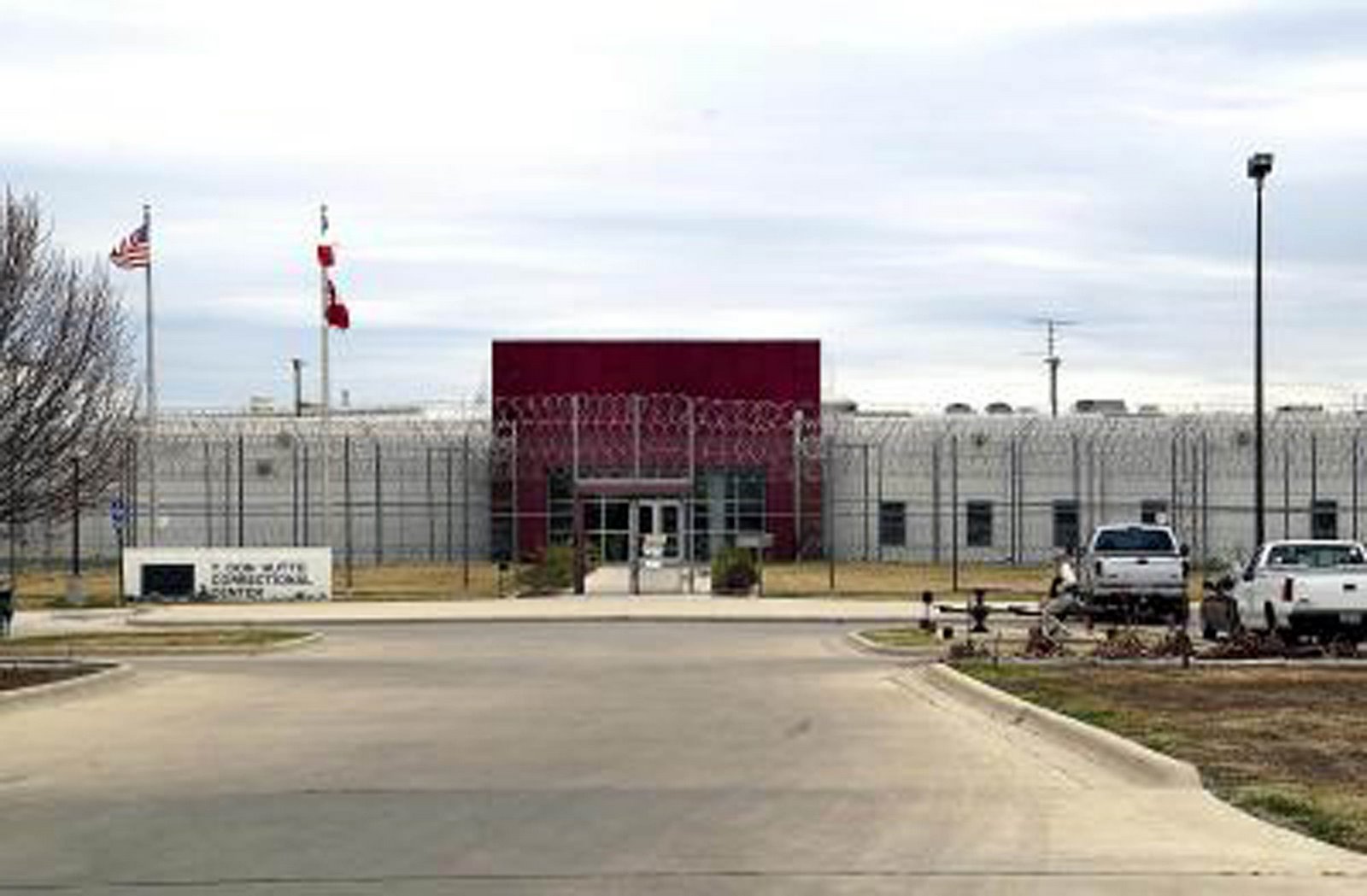
A 2007 settlement agreement ordered enforceable standards, including external oversight and improved education, nutrition and medical care, at the T. Don Hutto Residential Center, a former medium-security state prison.
But that agreement is scheduled to expire Aug. 29, and questions linger about whether the new standards will continue. Opponents of the 512-bed facility, including the American Civil Liberties Union, have lobbied members of Congress and held protests urging that the facility be closed.
Last week, several people spoke against the facility at the Williamson County Commissioners Court meeting.
"I do not believe that we should be placing the burden of our unresolved issues on children and families while they are waiting for an administrative resolution of their immigrant status," said Allene Booth-Judson, a retired director of special programs, including bilingual education and at-risk programming, at the Round Rock Independent School District. "Our country has many unresolved issues dealing with immigration."
The for-profit facility is operated by Corrections Corp. of America through a contract with Williamson County. The county receives about $15,800 a month from the company.
The Commissioners Court has sent a request to U.S. Immigration and Customs Enforcement and Corrections Corp. of America for written documentation that the standards will be upheld, said Williamson County Judge Dan Gattis.
"My beliefs are that the stipulations sent down by the court should be followed," Gattis said. "The county has little role in this because it's a federal deal."
Corrections Corp. of America spokesman Steve Owen referred questions about future standards at the facility to the immigration and customs agency.
A spokeswoman for ICE, which oversees the center, declined to comment on the matter.
The center, opened in 2006, holds families awaiting adjudication in immigration cases and has been criticized even after the settlement for what some have said are substandard living conditions for those held at the facility.
Detainees hail from all over the world and are seeking asylum or are being held on noncriminal violations of immigration law.
Two years ago , the University of Texas School of Law's Immigration Clinic and the ACLU of Texas won a settlement in a federal suit that accused the government of violating the rights of minors held at the center.
"The conditions at Hutto when we first began to work there in September 2006 and throughout our litigation were deplorable and are an example of what happens without external oversight," said Barbara Hines, director of the immigration clinic. "No modifications to Hutto would have been made without community advocacy and litigation."
The settlement mandated that each family be able to spend an unlimited time together in their rooms with the door open from 8 a.m. to 8 p.m.
It also eliminated scheduled head counts of residents, instead allowing them to check in with staff members three times a day, and ordered that children at the center be given five hours of schooling per day and that adult education classes be provided.
It also mandated that the government provide Spanish-speaking medical staff and a limited number of over-the-counter medications.
The immigration and customs agency also agreed to allow a federal magistrate to conduct periodic on-site reviews of the facility, which will end with the expiration of the settlement.
"I cannot imagine that they will literally roll back the clock and go back to treatment that I think has been roundly condemned as egregious," said Lisa Graybill, legal director for the ACLU of Texas, at a recent news conference. "That said, it is really worrisome to us that there will be no external oversight."
Graybill acknowledged improvements at the facility, but she is still pushing to shut it down.
"Some cosmetic improvements, which are significant, don't change the fact that it's a jail," Graybill said.
Late last year, the county commissioners extended a contract with Corrections Corp. of America for two years. The county has had a contract with the company and U.S. Immigration and Customs Enforcement since 2006 to act as the intermediary between the two and to disburse federal funds for the facility.
Graybill said the county could possibly shut down the facility if it decides to no longer take part in the agreement.
"Whether the government could operate the Hutto detention center absent Williamson County is a harder question," she said.


Tuesday, July 28, 2009
IACHR Releases Initial Reactions to Detention Center Visits
Last week, the Inter-American Commission on Human Rights Special Rapporteur visited detention facilities in the US, including the T. Don Hutto Family Residential Facility (see previous post). Today, they issued a press release containing their initial impressions. Read the full press release in English and Spanish; below are exerpts addressing family detention.
They go on to express grave concerns regarding adult detention, the custody of unaccompanied minors, and the local enforcement of federal civil immigration laws. They note that "frequent sub-contracting of the staffing for the facilities to private correctional service companies create significant obstacles to providing immigrant detainees care that comports with their basic human rights." The Rapporteurship also noted the remote location of adult detention centers created staffing difficulties, which prevented adequate provision of basic medical care, food services, and so on. Further, they criticized the use of solitary confinement to "protect" vulnerable populations (e.g. homosexuals, those with mental illness, other minorities), noting that this measure "effectively punishes the victims." And while Maricopa County's now infamous racial profiling and detainee abuses drew their attention, as well, the Rapporteurship noted that local law enforcement have used coercive tactics to force noncitizens to sign immigration-related documents, without legal counsel.
As in last week's meeting with the IAHCR delegation, it is clear that human rights abuses cannot be reduced to isolated incidents, rogue guards or police officials, nor accidents of geography. Rather, it the toxic combination of private--and unaccountable--prison corporations, a tacit acceptance of rights-infringement for noncitizens, and criminalization of civil immigration violatings that allows these abuses to continue.
Washington, D.C., July 28, 2009 - The Rapporteurship on the Rights of Migrant Workers and their Families of the Inter-American Commission on Human Rights completed a week of visits to various types of U.S. immigration detention facilities in Arizona and Texas. The purpose of the visit was to gather information from detention officials, detainees and civil society organizations regarding immigration enforcement, detention, and due process issues in the United States. ...
From July 20th to the 24th, a delegation from the Rapporteurship visited two unaccompanied minor shelters, a family detention facility, three adult detention facilities, and met with various representatives from civil society organizations focused on U.S. immigration issues. The delegation, headed by the Rapporteur, Felipe González, visited the Southwest Key Unaccompanied Minor Shelter (Phoenix, Arizona), the Florence Service Processing Center (Florence, Arizona), Pinal County Jail (Florence, Arizona), the T. Don Hutto Family Residential Center (Taylor, Texas), the Willacy Detention Center (Raymondville, Texas), and International Education Services (IES) Unaccompanied Minor Shelter (Los Fresnos, Texas). The Rapporteurship’s delegation also met with representatives of civil society organizations focused on immigration issues in Arizona and Texas. ...
Family Detention
The delegation observed that the physical conditions and services at the T. Don Hutto Family Residential Center have improved since the initiation of a class action lawsuit in 2007. The Rapporteurship, however, is concerned that it required a lawsuit and ultimately a settlement agreement to bring the physical conditions and services to their current levels. The Rapporteurship took note that the judge’s July 2009 monitoring report on the settlement agreement found the Government and the Correctional Corporation of America (CCA), the Government’s privately-contracted service provider for the family detention center, only recently came into compliance on at least one of the requirements under the Settlement Agreement – nearly two years after it went into effect. It was reported to the delegation that the Settlement Agreement is set to expire at the end of August 2009. Given the slow compliance by the Government, the improvements gained under the Settlement Agreement, including more transparency in parole assessments, may deteriorate absent monitoring.
More importantly, the Rapporteurship is concerned by the Government’s broad use of detention for asylum seekers and their accompanying minor children. The Government reported that over ninety percent of the families at the Hutto family detention facility are asylum seekers and their children. While the services at the Hutto facility have improved considerably, the detention of asylum seekers and their children in the manner observed is not in compliance with the principle of the “best interest of the child” to be in the least restrictive environment or with the principles applicable to the detention of asylum seekers under international law. Asylum seekers are fleeing persecution in their country of origin and the psychological impact of detention on the asylum seekers and their children is detrimental to their well being. The Rapporteurship observed an example of an alternative to detention in the Austin, Texas area that allows asylum seekers and their children to live in a home environment while their cases proceed. The Rapporteurship was troubled to receive reports that the Government was still considering the possibility of opening three more family detention facilities. ...
They go on to express grave concerns regarding adult detention, the custody of unaccompanied minors, and the local enforcement of federal civil immigration laws. They note that "frequent sub-contracting of the staffing for the facilities to private correctional service companies create significant obstacles to providing immigrant detainees care that comports with their basic human rights." The Rapporteurship also noted the remote location of adult detention centers created staffing difficulties, which prevented adequate provision of basic medical care, food services, and so on. Further, they criticized the use of solitary confinement to "protect" vulnerable populations (e.g. homosexuals, those with mental illness, other minorities), noting that this measure "effectively punishes the victims." And while Maricopa County's now infamous racial profiling and detainee abuses drew their attention, as well, the Rapporteurship noted that local law enforcement have used coercive tactics to force noncitizens to sign immigration-related documents, without legal counsel.
As in last week's meeting with the IAHCR delegation, it is clear that human rights abuses cannot be reduced to isolated incidents, rogue guards or police officials, nor accidents of geography. Rather, it the toxic combination of private--and unaccountable--prison corporations, a tacit acceptance of rights-infringement for noncitizens, and criminalization of civil immigration violatings that allows these abuses to continue.
Monday, July 27, 2009
ACLU meets with Inter-American Commission on Human Rights about T. Don Hutto facility
On July 20, 2009, the ACLU, Austin Immigrant Rights Coalition, Texans United for Families (that's us), Grassroots Leadership, attorneys representing Hutto detainees, and researchers from the Center for Public Policy Priorities met with the Inter-American Commission on Human Rights (IACHR) at the Texas ACLU office in Austin. The meeting followed a press conference at the University of Texas Law School. Both events highlighted the expiration of the 2007 settlement that dramatically improved conditions at Hutto.
Who is the IACHR? They are the independent, judicial arm of the Organization of American States, the supranational organization that oversees foreign relations in the Western Hemisphere. They seek to enforce human rights under the American Convention of Human Rights (ACHR). Find out more here.
Why the IACHR? The IACHR hears cases on human rights violations that have no further legal recourse in the country in question, and can only hear cases from countries that have ratified the ACHR. However, they also receive petitions to investigate and report on specific themes or problems, outside of a specific case. In 2007, they received a petition to investigate family detention and conditions of federal custody for unaccopmanied minors in the US. Due to onerous preconditions set by the Bush administration, they could not perform their duties.
The IACHR delegation visited the Hutto facility as part of a larger investigation into allegations of human rights violations in the U.S. immigration enforcement system.
The 2+ hour discussion revolved around:
The IACHR has long been concerned with conditions in US immigration detention centers, but has been rebuffed in its requests to collect information. (The US has not ratified the American Declaration of Human Rights.) The delegation showed much interest and concern over the sharp rise in immigration-related complaints received by the IACHR in recent years. In addition, the delegation expressed deep concern over the lack of due process that continues to plague the detention system in the US.
We'll be sure to post the report and advocates' reactions to it here, so stay tuned.
Who is the IACHR? They are the independent, judicial arm of the Organization of American States, the supranational organization that oversees foreign relations in the Western Hemisphere. They seek to enforce human rights under the American Convention of Human Rights (ACHR). Find out more here.
Why the IACHR? The IACHR hears cases on human rights violations that have no further legal recourse in the country in question, and can only hear cases from countries that have ratified the ACHR. However, they also receive petitions to investigate and report on specific themes or problems, outside of a specific case. In 2007, they received a petition to investigate family detention and conditions of federal custody for unaccopmanied minors in the US. Due to onerous preconditions set by the Bush administration, they could not perform their duties.
The IACHR delegation visited the Hutto facility as part of a larger investigation into allegations of human rights violations in the U.S. immigration enforcement system.
The 2+ hour discussion revolved around:
- the lack of licensing, external oversight of Hutto's conditions, and enforcability of ICE's existing standards.
- the long detention stays for asylum-seekers, who are fleeing abuse, torture, and trauma.
- the ongoing expansion of private detention facilities in remote locations, which prevents detainees from accessing legal counsel, know-your-rights orientations, and social services available in urban areas.
- the color-coding of detainees, and the security measures that accompany this system, which results in the lock-down of detention centers.
- limited medical and mental health care (often 1 hour per week) that is a direct result of for-profit prison companies' desire to keep costs low, rather than provide full-time medical care.
- routine sexual abuse of female detainees, in detention centers and by border patrol officers.
- care for unaccompanied children.
- increased federal prosecution of noncitizens for immigration-related offenses (e.g., document fraud), which as resulted in the separation of husbands and wives from their families and increased jail time.
- serious due process concerns surrounding these prosecution, in which 20+ noncitizens are prosecuted "in batches," represented by a single federal defender.
- the lack of discretion afforded immigration judges to issues stays of deportation or visas to parents with US citizen children with serious needs.
The IACHR has long been concerned with conditions in US immigration detention centers, but has been rebuffed in its requests to collect information. (The US has not ratified the American Declaration of Human Rights.) The delegation showed much interest and concern over the sharp rise in immigration-related complaints received by the IACHR in recent years. In addition, the delegation expressed deep concern over the lack of due process that continues to plague the detention system in the US.
We'll be sure to post the report and advocates' reactions to it here, so stay tuned.
Monday, July 20, 2009
Texans Protest Williamson County's Hutto Contract
On Tuesday, July 28, Williamson County residents will attend the weekly County Commissioners Court session (9:15 am, 710 Main Street, Georgetown, Tx). The county continues to serve as the intermediary between the Corrections Corporation of America (CCA) and Immigration and Customs Enforcement (ICE). County residents are outraged that, despite a federal lawsuit and loads of bad press, the county continues to facilitate the detention of families.
County residents are especially concerned that when the legal settlement between the ACLU/University of Texas Immigration Law Clinic and ICE expires in August, there will be no enforceable oversight. As the contractor, Williamson County is liable to ICE for violations and infractions at the facility.
While the facility has been much improved by the stipulations of the settlement (overseen by regular visits from a federal magistrate) Williamson County residents and the families' attorneys remain gravely concerned about conditions at T. Don Hutto. Two facts remain. First, ICE's Family Residential Standards are based on policies used at adult prisons, making them an inappropriate model for the care of families. Second, these standards are not enforceable. That means that CCA and Williamson County can fall out of compliance with little legal recourse by families detained there. While this may be legally convenient for the contractors, it does not release them from the responsibility for the care and welfare of families at Hutto.
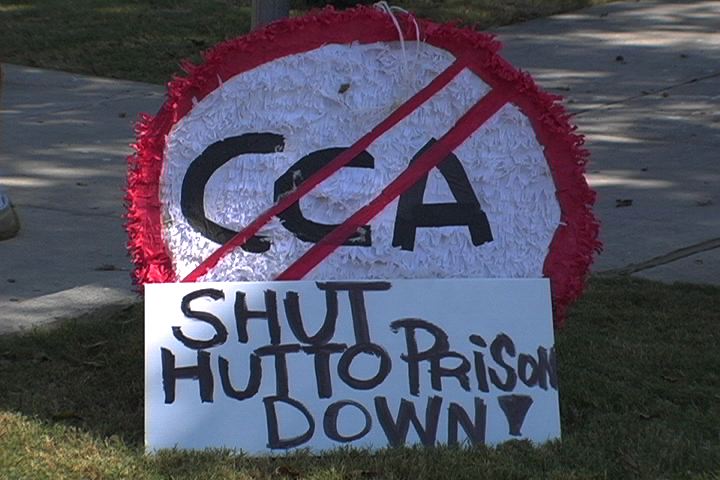
For some Williamson County residents, T. Don Hutto is a bad deal for the county, places too much liability on their shoulders, and generates too much bad press for the home towns. They call on the Commissioners' Court to end the contract and close Hutto down.
County residents are especially concerned that when the legal settlement between the ACLU/University of Texas Immigration Law Clinic and ICE expires in August, there will be no enforceable oversight. As the contractor, Williamson County is liable to ICE for violations and infractions at the facility.
While the facility has been much improved by the stipulations of the settlement (overseen by regular visits from a federal magistrate) Williamson County residents and the families' attorneys remain gravely concerned about conditions at T. Don Hutto. Two facts remain. First, ICE's Family Residential Standards are based on policies used at adult prisons, making them an inappropriate model for the care of families. Second, these standards are not enforceable. That means that CCA and Williamson County can fall out of compliance with little legal recourse by families detained there. While this may be legally convenient for the contractors, it does not release them from the responsibility for the care and welfare of families at Hutto.
For some Williamson County residents, T. Don Hutto is a bad deal for the county, places too much liability on their shoulders, and generates too much bad press for the home towns. They call on the Commissioners' Court to end the contract and close Hutto down.
Least of These: Premieres in New York and Georgetown, Tx

Clark Lyda and Jesse Lyda's renowned film, The Least of These, will premiere in NYC at the New York International Latino Film Festival. And next Monday, it will show in Georgetown, Texas, county seat of Williamson County, home of the T. Don Hutto Center and holder of the federal contract to detain families.
Monday, July 27, 7 pm Georgetown Public Library, Hewlett Room, 402 West 8th, Georgetown, TX.
Contact Susan Wukasch 868-2586/963-3969.
Wednesday, July 29, 8:30 pm
Clearview Cinemas Chelsea, 260 W. 23rd, between 7th & 8th Ave., NY, NY.
Followed by Q & A with Vanita Gupta (ACLU), Michelle Brané (Women's Refugee Commission), and the film's directors.
Tickets: $12~~Buy in advance here.
Followed by special film reception at Sala One Nine, located at 35 West 19th Street between 5th and 6th Avenue
(just bring your ticket stub).
Clearview Cinemas Chelsea, 260 W. 23rd, between 7th & 8th Ave., NY, NY.
Followed by Q & A with Vanita Gupta (ACLU), Michelle Brané (Women's Refugee Commission), and the film's directors.
Tickets: $12~~Buy in advance here.
Followed by special film reception at Sala One Nine, located at 35 West 19th Street between 5th and 6th Avenue
(just bring your ticket stub).
Saturday, June 27, 2009
House of Representatives Report on DHS Appropriations, 2010
A House of Representatives report on the Department of Homeland Security's 2010 appropriations dedicates a section to Child and Family Detention, Alternatives to Detention, and unaccompanied children in ICE custody in its review of Immigration and Customs Enforcement activities. On family detention, in particular, the Appropriations Committee
While this report does not go as far as ending family detention (nor could it), it is encouraging that Congress find detainings families with children increasingly distasteful. It's time to keep the pressure on. Immigration reform is on the horizon, and reforming the detention system must be a key part of this conversation!
Thanks to Adrienne for bring this to our attention!
Congress appears to be hearing us on the key issues--prison-like conditions, lack of accountability, inadequate use of alternatives, and long stays in detention. As we near the August expiration of the Hutto Settlement, and the federal district court oversight that goes along with it, these issues are critical to families detained at Hutto.
believes that detention is not generally appropriate for families and is concerned that the Department does not routinely make Alternatives to Detention available to families it takes into custody. In addition, while the Committee is pleased that ICE developed and implemented detention standards for families held in its custody, it remains concerned that ICE family detention standards are based on adult prison standards. The Committee directs the Department to prioritize the use of Alternatives to Detention program for families who do not need to be held in immigration detention. The Committee further directs the Office of Professional Responsibility to conduct a review of families detained in ICE custody since 2007 and determine whether ICE complied with its own internal guidance for when to hold families in custody and when to release them to Alternatives to Detention programs. The Committee directs ICE to report on the results of this review no later than the submission of the 2011 budget.
In addition, the Committee has heard reports of ICE prosecutors inappropriately using personal information about children when presenting cases in immigration court, such as medical records and psychological reviews. The Committee directs ICE to respect the privacy and confidentiality of detained children's case information, including privileged medical, psychological and social worker reports, and only to request access to those files when relevant to the case.
While this report does not go as far as ending family detention (nor could it), it is encouraging that Congress find detainings families with children increasingly distasteful. It's time to keep the pressure on. Immigration reform is on the horizon, and reforming the detention system must be a key part of this conversation!
Thanks to Adrienne for bring this to our attention!
Wednesday, June 24, 2009
Press Coverage of June 20 World Refugee Day Vigil

Thanks to all who turned out last Saturday! Here's a rundown of the press coverage...
The Williamson County Sun carried an article on the protest (see above).
Protestors ask President to shut down T. Don Hutto Russell Wilde, News 8 Austin.
The demonstraters called for the president to shut down the detention center, where refugees, including children, are held. "Immigration has a lot of challenges to it. I think we all realize there are situations we need to confront, but that these people, particularly the children, shouldn't be bearing the brunt of that," [St. Andrew's Presbyterian church minister Jim] Rigby said.Texans March Against Hutto Family Detention Center on World Refugee Day, MediaHacker via YouTube.
Immigration officials said the center allows them to enforce the law while allowing families to stay together.
Protesters said the people being held in the center are refugees and should not be held in a former prison.
"A message to our president to free the children. It's a message to our president to do it now," Johnson-Castro said. "That's a change we can believe in. It's a change we need."
Three videos, Social Justice TV via YouTube. **Newly added** 2 videos on the vigil, by CECLEF. AND 2 videos from closehuttodown.
Houston Indymedia has a video and and photo coverage, which you can also read at the Houston Students for a Democratic Society blog.
Thank y'all, and keep sending things my way!
Saturday, June 13, 2009
Diana Claitor: "We need to show the world we don't approve"
Diana Claitor of the Texas Jail Project, posting at The Rag Blog, calls on Austinites "to take every chance to show the feds and the world that we don’t approve, that we are not okay with refugee mamas and their babies and kids being incarcerated in a prison camp while their cases are decided."
She continues: "...one basic truth applies: it’s just not right. More humane and less-costly alternatives exist that keep families together and out of prison-like detention centers. A study by the Vera Institute found that more than 90% of immigrants on a supervised release program attended their immigration hearings. The average cost of a supervision program is $12 a day compared to reportedly over $200 a day to detain a person at Hutto."
Now's the time, Texans! Join us next week and show the world the US is better than family detention. Details above...
She continues: "...one basic truth applies: it’s just not right. More humane and less-costly alternatives exist that keep families together and out of prison-like detention centers. A study by the Vera Institute found that more than 90% of immigrants on a supervised release program attended their immigration hearings. The average cost of a supervision program is $12 a day compared to reportedly over $200 a day to detain a person at Hutto."
Now's the time, Texans! Join us next week and show the world the US is better than family detention. Details above...

Thursday, June 11, 2009
Austin City Council World Refugee Day Resolution
Austinites! Contact your councilperson and urge them to support refugees, migrants, and the rights of children in Austin and around the world. Special thanks to Free the Children for their advocacy!
Free the Children
Proposed Draft World Refugee Day Proclamation
Revised June 8, 2009
Be it known that,
Whereas
The City of Austin recognizes that the inherent dignity and the equal and inalienable rights of all members of the human family is the foundation of freedom, justice and peace in the world,
Whereas
On World Refugee Day, we turn our attention to the millions of refugees who live without material, social and legal protection.
Whereas
The Convention on the Rights of the Child is an internationally recognized agreement between nations that establishes a comprehensive set of goals for individual nations to achieve on behalf of their children.
Whereas
We are willing to join in harmony with voices worldwide to claim more reasonable and humane immigration policies.
The City of Austin, as a leader in the global community of urban centers, does
Proclaim
1. June 20 the day to recognize and celebrate World Refugee Day;
2. Support for the ratification of the United Nations Covenant on the Rights of the Child; and
3. Compassion for a just and viable alternatives to institutional detention of children and families within these United States and elsewhere, while such families await administrative resolution of their immigrant status.
Tuesday, June 9, 2009
HispanicNashville.com covers CCA reactions to Hutto Criticism
Hispanic Nashville interviews Louise Grant, public relations officer for CCA360.com, CCA's new website aimed at improving CCA's public image. Should we take it as a compliment that CCA has an image problem?
The Hispanic Nashville Notebook asked CCA how the company views the detention of children and families, or allegations of overincarceration - and whether the board or the company wrestles with the moral issues raised by opponents, or whether there is a limit to the kind of policies the company is willing to help implement. Here is the response of CCA VP of Marketing and Communications Louise Grant:Our government customers don't ask us our opinions on the moral implications. ... They make public policy decisions. ... Once those decisions have been made, they decide "Is the public government sector going to manage these individuals, or is the private sector?" ... We are not in the business of making moral decisions on U.S. public policy. ... Where we can have an influence is in our own facilities.When describing the moment when ICE approached CCA to turn Hutto into a family facility, Grant said that CCA initially turned the government down:Grant: Specifically in regard to Hutto, I can say our customer - Immigration and Customs Enforcement, again, they have been our customer for 25 years, they trust us - they came to us and asked us to operate a family detention center. We said no initially.Hispanic Nashville Notebook: Why was that?Grant: We said we have not had that expertise before - you know, we've managed adults. We've had a few juvenile facilities, but we have not managed a family detention center. Obviously, there was only one at the time in the country, in Pennsylvania, and we said no. And ICE came back to us and said, we've made the public policy decision that we are going to do this, and we want to partner who we trust; you've been a good partner for 25 years; we know you have high standards, you have integrity and strong ethics, and we would like you to do this. And we knew it was going to be an evolutionary process, because it was new for ICE and it was new for us, but we said OK we will do this. And we knew that there would be scrutiny. There was obviously the concern about safety and security to say, how can we ensure the absolute safest, most humane environment for these individuals. And our staff, who already goes through very rigorous training, went through a great deal more specialized training, and all of our counselors. And it has been an evolutionary process.I've been to that facility several times. The warden Evelyn Hernandez is a wonderful woman from Puerto Rico who has the greatest sensitivity, and her staff has the greatest sensitivity to the mothers and the children and the fathers. We do believe that keeping those children with their families is something we're proud of. Again, we've worked extremely hard not to get involved in the public policy decisions...
LULAC Returns CCA Sponsorship
Elaine Wolf of the San Antonio Current blogs about LULAC's relationship with Corrections Corporation of America, the private prison corporation that runs TDH: (read the full piece)
As a growing coalition of activists prepares for what they hope will be the most high-profile protest yet at the immigrant-family detention center in Taylor, Texas, fellow activists are challenging LULAC over sponsorship monies received from the private company that runs the prison. ...LULAC National Treasurer Jaime Martinez, a longtime San Antonio labor activist, says that when he was made aware of the sponsorship, he and President Rosa Rosales immediately initiated the return of the $10,000 that year."We don't want any sponsorships from CCA," said Martinez, calling the money "tainted."LULAC National Executive Director Brent Wilkes confirms Martinez's account, and says he believes the CCA money was returned in 2007, the last year that LULAC accepted sponsorship money from CCA for its conference. Previous years' funds were not returned, he said, in part because they were probably already spent.Prior to the Hutto conflict, says Wilkes, LULAC found many things to like about CCA, including a program the corporation initiated to give Mexican Nationals who would face deportation upon release from prison the opportunity to obtain the equivalent of a GED. Wilkes says he believes the CCA sponsorship money was for a Latino law-enforcement awards breakfast held at the conference."But when we found out about the Hutto facility," Wilkes said, "we returned the funds.""We felt very strongly that we didn't want to be associated with that," he added.
Thursday, June 4, 2009
Congressional Screening of "Least of These"

Please join the Women’s Refugee Commission and the American Civil Liberties Union for a Congressional screening of “The Least of These,” a remarkable new documentary on our efforts to improve and eliminate the detention of immigrant parents and their children.
Date: June 10, 2009
Location: The Capitol Visitor Center, South Congressional Meeting Room
Time: 6:00 pm
Featuring Remarks by Representative Lucille Roybal-Allard (CA-34th) and Representative Lynn C. Woolsey (CA-6th)
RSVP required to Sharita Gruberg (sharitag at wrcommission dot org)
(seating for the general public will be limited; refreshments will be provided)
By telling the powerful stories of detained families and their American advocates, the film draws attention to one of the most controversial aspects of U.S. immigration policy. There will be a Q&A following the screening featuring advocates Michelle Brané (Women’s Refugee Commission), Vanita Gupta (ACLU) and Clark Lyda, one of the film’s directors.
Subscribe to:
Posts (Atom)