Showing posts with label family detention. Show all posts

Wednesday, August 11, 2010

Taylor Daily Press: Vigil for detained families


Posted: Wednesday, August 11, 2010 1:00 am
Tricia Rosetty | 1 comment

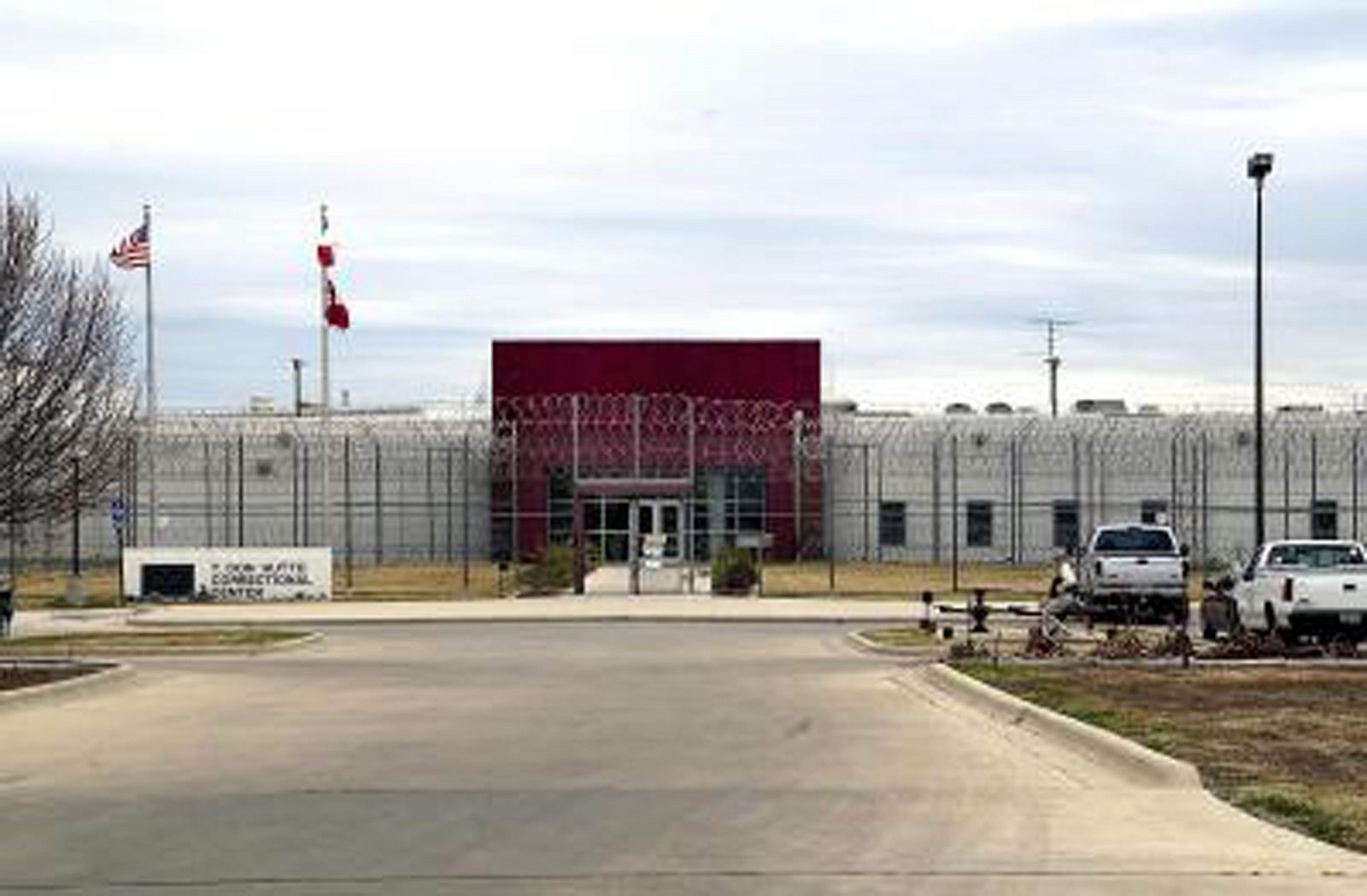
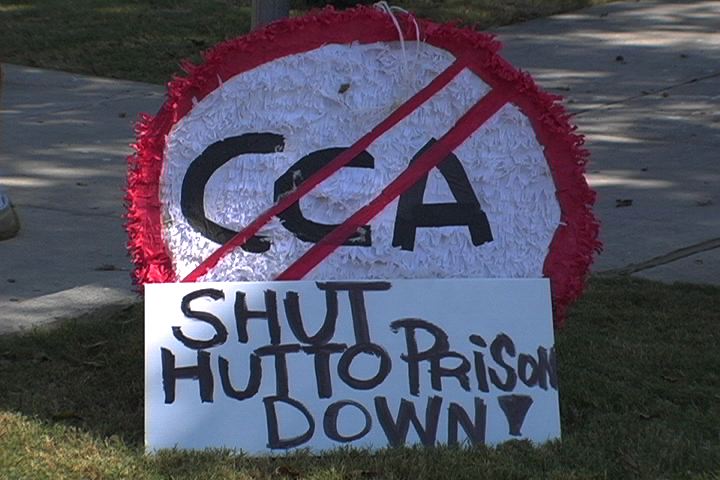
In a field outside of the T. Don Hutto detention facility, about 70 people gather in 100-degree weather. Sweat drips onto their poster board signs – signs that read “Dignity not detention” and “Immigrant civil human rights.” The peaceful gathering, one of more than two dozen over the last four years, commemorates significant change at the facility; namely, the one-year anniversary of changing policy to not detain families at the former prison, though women and children are still held.

According to organizer and president of Taylor’s chapter of the League of United Latin American Citizens (LULAC) José Orta, the vast majority of attendees at this weekend’s vigil were just people who care about the issue of immigrant detention, not those that know people in the facility. In fact, the group included people from as far away as San Antonio and the Rio Grande Valley. The display of solidarity at the first vigil to be held this year was important.

“The biggest problem in the community is the apathy that happens,” Orta said. “People become apathetic to this cause. They don’t see it as an issue that touches them, but then when it does they’re surprised that these measures have become so draconian.”

The T. Don Hutto facility has been run by the Corrections Corporation of America and faced two allegations of sexual assault by CCA guards in the last three years, casting uncertainty about the private company’s management. Grassroots organizations across the country have focused on reform at this and similar facilities.

“I thought it was really powerful for people to get together and express their feelings about detention reform. I think people have been pretty disappointed that there haven’t been more reforms,” said Bob Libal, Texas campaign coordinator for Grassroots Leadership, the umbrella organization for Texans United for Families. TUFF, a group fighting to bring attention to immigrant rights, emerged from the vigils at T. Don Hutto, said Orta. In addition to sharing their perspective on the importance of the issue, those in attendance marched with signs and chanted together for over an hour.

“The good thing about chanting and using a microphone is that it creates an echo. We were just hoping that the detainees could hear us,” said Orta, noting that a view from the entrance was blocked when the event began. While the detainees may not have been able to see their supporters, the importance of the issue to those present was clear.

“Being in the country illegally is a civil matter, not a criminal matter,” said Orta. He said that the model of using detention facilities is not the answer because it uses a criminal justice mindset to address a civil issue – a model he fears will be emulated at other sites. Orta suggested that house arrest or even ankle bracelets would be preferable to detention at a facility like T. Don Hutto.

“If you feel they don’t deserve to be here, send them back. Don’t keep them here for months as a form of punishment as if they’ve done something criminal,” said Orta, noting that many individuals who are in the country illegally are seeking amnesty from dangerous situations in their home country. “Just because these people are not citizens, doesn’t mean they don’t deserve to be heard.”

Orta suggested that a federally run program would provide accountability that privatization does not and simplify transparency.

“Our immigration system is broken and we need to fix it. Detention like this for long periods of time is not the answer,” said Orta. “There has to be some kind of reform because this detention is not giving us any sense of goodwill throughout the world, and that’s not the way our country should be seen.”

Friday, August 7, 2009

Michelle Brané: Good News on Immigration Detention But Keeping the Pressure On

We're blogging our fingers off, but here's an excellent post from long-time family and child advocate, Michelle Brané, posted at the Huffington Post:

Immigration and Customs Enforcement's (ICE) announcement this week that they will stop detaining families at the T. Don Hutto Residential Center in Taylor, Texas, is terrific news. When I first visited the facility, which is a former prison, in December of 2006 I was shocked at what I saw -- kids getting only one hour of school a day, terribly inadequate medical care, insufficient time to eat, and, worst of all, inappropriately severe discipline. (See my report: Locking Up Family Values: The Detention of Immigrant Families.)

The facility was part of the Bush administration's plan to end what they called "catch and release." That administration gave the impression that families were swarming across the border and that smugglers were using babies as "mules" to prevent the detention of their clients. But they were never able to fill Hutto and they never to my knowledge identified a trafficked child through the new process.

What I saw at the facility were families -- mostly women, many of them pregnant, most with very young children -- who were fleeing to the United States for protection. The trek north through the desert is extremely dangerous and difficult. Many die on the journey. This is not a trip you make with your young children unless you are desperate. It also doesn't make sense to bring your toddler with you if you sole intention is to work illegally. It was clear from speaking with these women that they had real fears and valid claims to asylum.

But at Hutto they were treated as criminals, and their children were punished as well. Families slept in actual jail cells -- with prison cots and toilets in the cells. Children had some toys in the common areas but were not allowed to take anything into their cells at night. One family told me about a six-year-old child who cried when a prison guard told him he could not take the picture he had drawn into his cell. The guard yelled at him for crying, and the child's father tried to intervene. As punishment, the child and his father were separated -- to different wings of the facility -- for three days!

Following our report and the ensuing media attention and an ALCU lawsuit, the facility underwent improvements -- including providing education for the children, recreation opportunities, freedom of movement -- but family detention standards that were implemented are entirely inappropriate and still do not address issues of discipline and common decency. I couldn't be happier that families will no longer be placed in this facility. And the administration's decision is a clear indication that they are taking steps in the right direction.

I am worried though. Because the administration has made it clear that they will continue to detain families at another facility I have visited many times. The Berks County Family Shelter Care facility in Leesburg, Pennsylvania. That facility is not as blatantly disturbing as Hutto. It is a former nursing home -- not a prison. But the term "shelter" is still misleading. In 2006, I met families that had been detained there for two years. Children over five are separated from their parents at night. The same sort of disciplinary issues I mentioned above exist at Berks, too. The administration has indicated that they will be looking into alternatives to detention. I hope they mean it and I hope they do it quickly.

Advocates for immigrant rights are losing patience. The administration has been reviewing the system for six months and saying that they understand that the current criminal model of immigration detention is inappropriate for civil detainees. But they have also made it clear in statements and through their actions that they will continue aggressive enforcement operations and that they expect the detained population to grow. That means that some 440,000 immigrants and asylum-seekers are expected to be detained in the U.S. this year. We need to be realistic. We need immigration reform and that has to come from Congress.

Our current laws are unforgiving and unrealistic. We also need to be patient and give the administration time to overhaul a detention system that is a mess. I am not saying we should give them a free pass -- but my interaction with ICE headquarters since the change in administration has been positive. I think they are sincere in their desire to make the system more humane. We have no choice. We have to take a big of a leap of faith -- both sides, and work together. We can still hold them accountable -- especially if we don't see improvement. The announcement to stop using Hutto for families is the administration's attempt to show us they mean it and are trying. The former administration had been planning to increase family detention space with a request for proposals for up to three new facilities. This week, we went from fearing an increase to a cut in family bed space of 75 percent. That is pretty good.

The Obama administration has a lot more work to do to demonstrate that they mean what they say. For now, we have to trust that and do what we can to help them implement change while still holding them accountable.

What about Berks?

The numerous reports highlighting the transfer of families from Hutto to Berks have brought attention to this rather under-publicized family residential facility, and I thought I'd provide some information about Berks. (The Reading Eagle reports, however, that the Berks Family Shelter Care Center is full. See previous post.)

Berks was opened in March of 2001, as an extension of Berks County's contract with then-INS' juvenile detention program. It is located on a large tract of land in Bernville Township that holds a number of county services: recycling, water treatment, an elderly care facility, a prison, a youth corrections center, a juvenile detention center, a community college, and an agricultural center.

The family detention center is located in an old nursing home, built in the 1950s. Still called Berks Heim by locals, the facility was a state of the art residence for elderly folks that required specialized care. Built as a residence, rather than a prison, Berks has been held up as an alternative to T Don Hutto. Licensed by the state of Pennsylvania and run according to child welfar principles, Berks has not been subject to the same media or legal attention as Hutto.

But as the Women's Refugee Commission's Michell Brané pointed out in Locking up Family Values, Berks is far from perfect. In response to ICE's policy change, Brané maintains: "While conditions there were not as shocking as those at Hutto, they are not appropriate. For example, children over five, are separated from their parents at night. We believe that families should not be detained unless absolutely necessary and only for an extremely short period of time.” (See the Women's Commissions full press release here.)

Both the ACLU and the Women's Commission (as well as others) have argued the authority structure of detention is harmful to families, since it strips parents of their role as arbiters of the family unit. While much of the attention has been focused on the conditions of detention, people often forget the effects any institutional environment will have on the less tangible--but fundamental--relationships between parents and children.

Mentioned even less often is how institutionalization effects relationships between parents, since their contact is highly constrained. Married couples cannot, for example, sleep together nor show affection towards each other. These kinds of relationships require some degree of privacy, which is difficult to balance with security and authority structures inherent to institutional custody.

There is no research on this, but as human beings, we can expect that compiling the stress of filing and pursuing claims with an inability to care for each other in familiar ways will have long terms effects on family relationships. This points to the larger question, which Brané has repeated asked, about the suitability detaining any families at all.

What will happen to the families at Hutto?

Many have been asking us what will happen to the families currently detained at Hutto. According to the Philadelphia Inquirer,

Morton said the process of transferring families from Texas to Pennsylvania would begin immediately.

"For the immediate future we will use Berks to its capacity," Morton said. To the extent that ICE needs more capacity for families, he said, the agency would explore alternatives to detention, including supervised release and electronic monitoring with ankle bracelets.
ICE is not ending family detention policy, but is making use of the more humane of the two facilities and a range of non-detention forms of custody. Despite what critics have argued, this is not a "catch and release" policy, but more like a "catch and follow" policy. Families can expect to be required to call ICE at daily, weekly, or other regular intervals, to have ICE officers visit them at home or work, to be assigned electronic monitoring ankle bracelets, and other forms of supervision. Bond and parole may be used more widely, as well, which requires that families post $4-10,000 for each adult (less for children) to guarantee court appearance.

Thursday, August 6, 2009

Austin-America Statesman: Hutto to cease detaining families

Report: Government plans to stop sending families to Taylor detention center
T. Don Hutto would be converted to facility for immigrant women, Obama Administration official says.


COMPILED FROM STAFF AND WIRE REPORTS

Thursday, August 06, 2009
The Obama administration plans to announce today that the government will stop sending families to the T. Don Hutto Residential Center in Taylor — where families are held while they await adjudication of their immigration cases — as part of an overhaul of the nation's immigration detention system, The New York Times reported.

Details of the overall plan are sketchy, and even the first steps will take months or years to complete, the newspaper reported.

The plan includes reviewing the federal government's contracts with more than 350 local jails and private prisons, with an eye toward consolidating many detainees in places more suitable for noncriminals facing deportation — some possibly in centers built and run by the government.

But the government would take immediate action on Hutto, a 512-bed center run for profit by the Corrections Corp. of America under a $2.8-million-a-month federal contract.

The facility was a centerpiece of the Bush administration's approach to immigration enforcement when it opened in 2006. The decision to stop sending families there — and to set aside plans for three more family detention centers — is the Obama administration's clearest departure from its predecessor's immigration enforcement policies, the newspaper said.

Dan Kowalski, an Austin immigration attorney who represents a woman formerly housed at the Hutto facility in Taylor, welcomed the announcement.

"I'm happy to hear it. My only question is, 'What are they going to do with the people that they would have sent to Hutto?' " he said.

John Morton, who heads the Immigration and Customs Enforcement agency as assistant secretary of homeland security, told The New York Times on Wednesday that Hutto will be converted into an immigration jail for women. He said that he hasn't ruled out the possibility of detaining families but that the Berks Family Shelter Care Facility, an 84-bed former nursing home in Leesport, Pa., is a better facility for those detainees.

Reached by phone Wednesday evening, Williamson County Judge Dan A. Gattis' first reaction was, "Good. My quote is: Good."

The facility has drawn unwanted attention to Williamson County. Opponents including the American Civil Liberties Union have lobbied Congress and held protests urging that the facility be closed, and citizens have spoken against it before county commissioners.

The University of Texas School of Law's Immigration Clinic and the ACLU of Texas won a settlement in a federal suit that accused the government of violating the rights of minors held at the center.

The 2007 settlement agreement ordered enforceable standards at the center, including requirements that families be able to spend an unlimited time together in their rooms with the door open from 8 a.m. to 8 p.m., eliminating scheduled head counts and ordered five hours of schooling per day for children, among other things. That agreement was scheduled to expire Aug. 29.

"We're happy that the administration is taking a look at its policies on family detention," said Jose Medina, a spokesman for the ACLU of Texas. "We're eagerly waiting to see what the details are. But this is clearly a positive development."

Gattis said the administration's move would take the pressure off the county, which he described as acting as a middle man between the federal government and Corrections Corp. of America. Williamson County receives about $15,800 a month under its latest 2-year contract with the company, which commissioners voted to renew in December.

"I've always said, whatever (the federal government's) policy is, we're here to help," he said. "It's really their policy, not ours."

The new policy, according to The New York Times, aims to establish more centralized authority over the detention system, which holds about 400,000 immigration detainees over the course of a year, and more direct oversight of detention centers.

The number detained at Hutto has dropped sharply, to 127 individuals from as many as 450, the newspaper said.

Additional material from staff writers Miguel Liscano and Andrea Lorenz

BREAKING NEWS: ICE ENDS FAMILY DETENTION AT T DON HUTTO

At 11 pm last night, the New York Times led with the following story:

The Obama administration intends to announce an ambitious plan on Thursday to overhaul the much-criticized way the nation detains immigration violators, trying to transform it from a patchwork of jail and prison cells to what its new chief called a “truly civil detention system.”

One move starts immediately: the government will stop sending families to
the T. Don Hutto Residential Center, a former state prison near Austin, Tex.,
that drew an American Civil Liberties Union lawsuit and scathing news coverage for putting young children behind razor wire.

“We’re trying to move away from ‘one size fits all,’ ” John
Morton, who heads the Immigration and Customs Enforcement agency as
assistant secretary of homeland security, said in an interview on Wednesday.
Detention on a large scale must continue, he said, “but it needs to be done
thoughtfully and humanely.”

Hutto, a 512-bed center run for profit by the Corrections Corporation
of America under a $2.8 million-a-month federal contract, was presented as a
centerpiece of the Bush administration’s tough approach to immigration
enforcement when it opened in 2006. The decision to stop sending families there
— and to set aside plans for three new family detention centers — is the Obama
administration’s clearest departure from its predecessor’s immigration
enforcement policies. ...

Ms. Gupta said the changes at Hutto since 2006 illustrated the importance of enforceable rules. Before the A.C.L.U. lawsuit was settled in 2007, some children under 10 stayed as long as a year, mainly confined to family cells with open toilets, with only one hour of schooling a day. Children told of being threatened by guards with separation from their parents, many of them asylum-seekers from around the world.


Only through judicial enforcement of the settlement, she said, have children been granted such liberties as wearing pajamas at night and taking crayons into family cells. The settlement also required the agency to honor agency standards that had been ignored, like timely reviews of the decision to detain a family at all. Some families have been deported, but others were released or are now awaiting asylum decisions in housing run by nonprofit social service agencies.


That kind of stepped-up triage could be part of the more civil detention system envisioned by Mr. Morton and Dr. Schriro, who has been reviewing the detention system for months and is expected to report her recommendations soon.
But the Hutto case also points to the limits of their approach, advocates say. Under the settlement, parents and children accused of immigration violations were detained when possible at the country’s only other family detention center, an 84-bed former nursing home in Leesport, Pa., called the Berks Family Shelter Care Facility. The number detained at Hutto has dropped sharply, to 127 individuals from as many as 450.


Advocates noted that Berks, though eclipsed by the criticism of Hutto — the subject of protest vigils, a New Yorker article and a documentary — also has a history of problems, like guards who disciplined children by sending them across the parking lot to a juvenile detention center, and families’ being held for two years.
The Hutto legal settlement expires Aug. 29. In the most recent monitoring report last month, Magistrate Judge Andrew W. Austin wrote: “Although the use of this facility to hold families is not a violation of the settlement agreement, it seems fundamentally wrong to house children and their noncriminal parents this way. We can do better.”


Mr. Morton, a career prosecutor, seemed to agree. Hutto will be converted into an immigration jail for women, he said, adding: “I’m not ruling out the possibility of detaining families. But Berks is the better facility for that. Hutto is not the long-term answer.”

Tuesday, July 28, 2009

IACHR Releases Initial Reactions to Detention Center Visits

Last week, the Inter-American Commission on Human Rights Special Rapporteur visited detention facilities in the US, including the T. Don Hutto Family Residential Facility (see previous post). Today, they issued a press release containing their initial impressions. Read the full press release in English and Spanish; below are exerpts addressing family detention.

Washington, D.C., July 28, 2009 - The Rapporteurship on the Rights of Migrant Workers and their Families of the Inter-American Commission on Human Rights completed a week of visits to various types of U.S. immigration detention facilities in Arizona and Texas. The purpose of the visit was to gather information from detention officials, detainees and civil society organizations regarding immigration enforcement, detention, and due process issues in the United States. ...

From July 20th to the 24th, a delegation from the Rapporteurship visited two unaccompanied minor shelters, a family detention facility, three adult detention facilities, and met with various representatives from civil society organizations focused on U.S. immigration issues. The delegation, headed by the Rapporteur, Felipe González, visited the Southwest Key Unaccompanied Minor Shelter (Phoenix, Arizona), the Florence Service Processing Center (Florence, Arizona), Pinal County Jail (Florence, Arizona), the T. Don Hutto Family Residential Center (Taylor, Texas), the Willacy Detention Center (Raymondville, Texas), and International Education Services (IES) Unaccompanied Minor Shelter (Los Fresnos, Texas). The Rapporteurship’s delegation also met with representatives of civil society organizations focused on immigration issues in Arizona and Texas. ...

Family Detention

The delegation observed that the physical conditions and services at the T. Don Hutto Family Residential Center have improved since the initiation of a class action lawsuit in 2007. The Rapporteurship, however, is concerned that it required a lawsuit and ultimately a settlement agreement to bring the physical conditions and services to their current levels. The Rapporteurship took note that the judge’s July 2009 monitoring report on the settlement agreement found the Government and the Correctional Corporation of America (CCA), the Government’s privately-contracted service provider for the family detention center, only recently came into compliance on at least one of the requirements under the Settlement Agreement – nearly two years after it went into effect. It was reported to the delegation that the Settlement Agreement is set to expire at the end of August 2009. Given the slow compliance by the Government, the improvements gained under the Settlement Agreement, including more transparency in parole assessments, may deteriorate absent monitoring.

More importantly, the Rapporteurship is concerned by the Government’s broad use of detention for asylum seekers and their accompanying minor children. The Government reported that over ninety percent of the families at the Hutto family detention facility are asylum seekers and their children. While the services at the Hutto facility have improved considerably, the detention of asylum seekers and their children in the manner observed is not in compliance with the principle of the “best interest of the child” to be in the least restrictive environment or with the principles applicable to the detention of asylum seekers under international law. Asylum seekers are fleeing persecution in their country of origin and the psychological impact of detention on the asylum seekers and their children is detrimental to their well being. The Rapporteurship observed an example of an alternative to detention in the Austin, Texas area that allows asylum seekers and their children to live in a home environment while their cases proceed. The Rapporteurship was troubled to receive reports that the Government was still considering the possibility of opening three more family detention facilities. ...


They go on to express grave concerns regarding adult detention, the custody of unaccompanied minors, and the local enforcement of federal civil immigration laws. They note that "frequent sub-contracting of the staffing for the facilities to private correctional service companies create significant obstacles to providing immigrant detainees care that comports with their basic human rights." The Rapporteurship also noted the remote location of adult detention centers created staffing difficulties, which prevented adequate provision of basic medical care, food services, and so on. Further, they criticized the use of solitary confinement to "protect" vulnerable populations (e.g. homosexuals, those with mental illness, other minorities), noting that this measure "effectively punishes the victims." And while Maricopa County's now infamous racial profiling and detainee abuses drew their attention, as well, the Rapporteurship noted that local law enforcement have used coercive tactics to force noncitizens to sign immigration-related documents, without legal counsel.

As in last week's meeting with the IAHCR delegation, it is clear that human rights abuses cannot be reduced to isolated incidents, rogue guards or police officials, nor accidents of geography. Rather, it the toxic combination of private--and unaccountable--prison corporations, a tacit acceptance of rights-infringement for noncitizens, and criminalization of civil immigration violatings that allows these abuses to continue.

Monday, April 27, 2009

News Coverage: Houston's El Día Highlights the Movement against Family Detention

A Spanish-language newspaper in Houston, Texas, published a feature on Hutto and family detention:

Familias inmigrantes encarceladas: Unidas, pero en el sufrimiento  

Huyen de las guerras, de las pandillas, de la violencia doméstica y cuando llegan a solicitar asilo, terminan encerrados con sus hijos en una cárcel de inmigración.

José Carrera
DIARIO EL DÍA

HOUSTON.— Es un edificio acondicionado con todas las comodidades. Allí, incluso, las familias pueden aprender inglés y hasta pueden dormir en camas cómodas. Además, les dan consejería a las madres para que, supuestamente, sean mejores madres. Reciben cuidados médicos de calidad y por sobre todo, el objetivo de este centro es mantener a las familias juntas para que no se extrañen. ¿Es este lugar un centro comunitario o un centro de albergue de familias necesitadas? No exactamente. Se trata más bien del Centro Residencial Familiar T. Don Hutto, como lo dice la Agencia de Inmigración y Control de Aduanas (ICE, por sus siglas en inglés). Hasta los que les contamos antes, el objetivo del centro parece noble y su nombre suena bonito y hasta atractivo. Lo que sucede adentro, sin embargo, ha sido motivo de demandas judiciales, denuncias públicas y ha indignado a muchos.

En realidad se trata exactamente de una prisión. Está ubicada a unas 150 millas de Houston, al noreste de Austin, donde actualmente se encuentran encerrados 500 inmigrantes indocumentados en vía de deportación o que están esperando la aceptación de su petición de asilo político en los Estados Unidos.

Revueltos, pero no juntos
De los 500 inmigrantes, unos 120 son madres con cerca de 130 niños –entre ellos varios recién nacidos- y unas 250 mujeres sin niño. Así se lo contó a El Día Bob Libal, miembro de “Grassroots Leadership” con sede en Austin y que junto a otras organizaciones de Texas y de todo Estados Unidos, están librando una batalla masiva para que todos los detenidos sean liberados y luego clausurar definitivamente la prisión, a la que llaman al “Guantánamo de Texas”.

La prisión Hutto fue habilitada por ICE en mayo de 2006 tras firmar un acuerdo intergubernamental con el condado Williamson para de esa manera poner un fin al sistema de “atrapado y luego liberado”, que consiste en que los indocumentados arrestados por la ‘migra’ salen libres con la promesa expresa de que se presentarán ante un juez de inmigración. “Sin embargo, antes de la apertura de Hutto, era rara la vez que se presentaban”, dice ICE. Y agrega: “Antes, los coyotes preferían traer a adultos con niños con la intención de evitar que los ilegales sean detenidos”.

Campaña de 100 días
“Nuestra meta es lograr que el presidente Barack Obama ordene el cierre de esta prisión. El sabe lo que sucede adentro de esta cárcel desde que andaba en campaña política”, expresó Libal. “Es vergonzoso encerrar a niños en una cárcel”, añadió. En Houston también hay un movimiento fuerte de abogados, líderes comunitarios y principalmente estudiantes universitarios que educan al público hispano y a la misma sociedad americana sobre los sufrimientos de las familias inmigrantes en Hutto.


Uno de los grupos más activos son los que forman parte de Estudiantes por una Sociedad Democrática (SDS, por sus siglas en inglés), que en la actualidad están en medio de una campaña de cien días en la que incluyen protestas frente a la prisión Hutton en Taylor, vigilias, recolección de firmas y manifestación en Houston delante del centro de detención de inmigrantes. En días recientes, el SDS armó una minicelda en el “Butler Plaza” de la Universidad de Houston, donde se encerraron familias completas y niños, para de esa manera concientizar a los estudiantes sobre los terribles efectos que tiene el encierro sobre las familias inmigrantes.

Rechazan la lógica del gobierno federal
Rob Block, miembro de SDS, y otros compañeros ya juntaron en Houston más de 600 firmas –a nivel nacional 47 mil- que serán enviadas al presidente Obama y al Departamento de Seguridad Interna –de la que forma parte el ICE- expresándoles su indignación sobre esta prisión y exigen su cierre.

“En ninguna circunstancia es justo aprisionar a los niños que no han cometido ningún crimen. Hutto es un claro ejemplo de cuán obsoleto es el actual sistema migratorio”, comentó Block. El y otros activistas rechazan la lógica del gobierno federal de poner a los padres (en este caso en su gran mayoría madres) indocumentados con sus hijos como una manera para mantenerlos unidos.”Es una buena premisa pero una mala solución. La prisión no es una herramienta para lidiar con la inmigración”, acotó.

Cárceles privadas = $$$
De acuerdo con “Grassroots Leadership”, Hutto deja una ganancia directa al condado Williamson unos 246.000 dólares por año, mientras que CCA recibe de ICE cerca de 2.8 millones de dólares mensualmente. Cada inmigrante encerrado costaría al gobierno federal unos 95 dólares por día, mientras que otras estimaciones indican que el costo real es 200 dólares por día. De ser así, comentan, convendría más poner a los inmigrantes presos en el hotel Hilton y todavía les sobrará mucho dinero. CCA opera alrededor de 70 centros de detenciones, cárceles y prisiones en 20 estados, 15 de ellas en Texas, añade Grassroots.
Stephanie Caballero, estudiante de Ciencias Políticas y Estudios Latinoamericanos en la Universidad de Houston, busca que más personas, especialmente los estudiantes, se unan al movimiento en contra de la proliferación de las cárceles privadas en donde los humildes inmigrantes –no aquellos que hayan cometido crímenes serios- son encerrados. “Queremos que los estudiantes se levanten para presionar a los poderosos”, dijo. “Estas cárceles no deben seguir existiendo. Tener prisiones como éstas es inmoral e inhumano”. Su parecer es que los niños no deben ser encerrados en prisiones, muchos menos por razones migratorias y especialmente para que los únicos beneficiados sean las empresas que promueven el aumento de las cárceles privadas.

Ella ha participado en varias protestas en Taylor y cada vez que se encuentra en el lugar siente una gran indignación. “Muy enojada”, dijo al contestar la pregunta sobre qué siente al visitar esa prisión. “Esta gente de ICE y CCA no tiene conciencia, no tiene moral. Cómo es que pueden tratar a los inmigrantes como criminales. No lo puedo creer. ¿Esto está pasando en mi propio estado?”, aseveró.

Es inhumano encarcelar a niños y mujeres
Delfina Pei, estudiante de tercer año de Ciencias Políticas en UH, comentó: “Me gustaría ver que todas estas prisiones privadas sean cerradas. Al proveer menos servicios a los inmigrantes encerrados, cárceles como Hutto están ganando más dinero”, expresó. Añade que al acercarse a la prisión Hutto, la primera cosa que le llama la atención es la zona de juegos para los niños, pero al prestar más atención, ve que todo el complejo carcelario está rodeado de altos cercos con alambre de púa. “Es un lugar donde no quisieras ver a tus hijos crecer”, comentó.
Lisa Delaune, madre de dos hijos y miembro de la organización WHEW, que presta ayuda a mujeres de minorías que acaban de salir de la cárcel o que no tienen casas o hayan sido víctima de violencia doméstica, se “encerró” en la celda de protesta en la Universidad de Houston para mandar un mensaje al público: “La inmigración ilegal no debería ser lo mismo que criminalidad. Es inhumano encarcelar a niños y mujeres. Como madre simplemente me indigna el solo hecho imaginar que tengo que estar encerrada en un cárcel con mis hijos de 6 y 12 años”.
Cambio a fuerza de demanda
•    La Unión Americana de Libertades Civiles (ACLU) ha presentado el año pasado una demanda para obligar a al ICE mejorar las condiciones de vida de los niños en la prisión Hutto. Muchos de los niños a los que ACLU representó ya salieron libres y se están quedando con otros familiares.
•    De acuerdo a ACLU, la demanda surgió debido a la Hutto viola varias provisiones de una decisión de corte de 1997 “Flores vs. Meese”, que estableció ciertos requisitos que deben cumplir en la forma de tratar a los menores que se encuentran bajo la custodia federal.

La demanda contra ICE permite a ACLU a ingresar a Hutto para monitorear si se ha cumplido 
o no los acuerdos de corte, pero este derecho se vence en agosto y los activistas temen que la situación se empeore. Tras la demanda contra ICE, éstas son algunas de las condiciones expuestas en el trato que en busca de mejoras dentro de dicho centro de detención

•    Niños mayores de 12 años tendrán la libertad de movilizarse libremente dentro de las instalaciones.
•    Todos los niños contarán con un médico pediatra las 24 horas del día.
•    No se usará más el sistema de conteo de tiempo para evitar que las familias no estén forzadas a permanecer 12 horas del día dentro de una celda.
•    Se instalarán cortinas alrededor de las salas sanitarias (toilets y duchas).
•    Se les ofrecerán paseos recreacionales a los niños.
•    Los niños tendrán nuevos juguetes, y nuevos libros.
•    Se mejorarán los menús (valor nutricional).
•    ICE también permitirá la orientación legal por parte de organizaciones comunitarias.
•    Permitir la visita por parte de familiares y amigos los siete días de la semana.
•    La agencia (ICE) solo llevará al centro Hutto a las familias que estén por ser deportadas.
La alternativa a la prisión Hutto
-    Cerrar esta prisión.
-    Que las madres y sus hijos indocumentados sean dejados libres sin pagar fianza, esto hasta que se resuelva sus casos migratorios en corte.
-    Si van a pagar fianza, no sea más de 1.500 dólares -que los niños queden con otros familiares.
-    Implementar un sistema de monitoreo (grillete electrónico, etc.) de los que salen libres.
Fuente: “Grassroots Leadership”

Las frases
-    “Ser indocumentado no es lo mismo que ser criminal. Es muy normal que las personas traten de buscar mejoras para su familia”. Stephanie Caballero, estudiante de Ciencias Políticas.
-    “Nuestra meta es lograr que el presidente Barack Obama ordene el cierre de esta prisión”. Bob Libal, miembro de “Grassroots Leadership”.
-    “Me gustaría ver que todas estas prisiones privadas sean cerradas”. Delfina Pei, estudiante de Ciencias Políticas en UH.
-    “Como madre simplemente me indigna el solo hecho imaginar que tengo que estar encerrada en un cárcel con mis hijos de 6 y 12 años”. Lisa Delaune, la organización WHEW.
Documental de sufrimiento y lucha

"The Least of These" es un documental sobre la prisión de Hutto y la lucha por mejorar las condiciones adentro o inclusive para cerrarlo. La cinta ya fue estrenada en Austin y ya hay en DVD.

Llanto de niños
Algunos testimonios de niños encerrados en esta prisión. Muchos de ellos ya salieron libres, mientras que otros siguen encerrados.

•    “Tengo miedo de los guardias”.
•    “Nos tratan como si no fuéramos nadie”.
•    “Estoy aterrorizada de que me separen de mi madre. No me puedo imaginar cómo será mi vida sin ella”.
•     Estoy muy deprimida y sin madre creo que me volveré totalmente loca”.
•     “No me gusta quedarme en esta cárcel. Tengo solamente nueve años de edad. Este lugar no es bueno para mí. Quisiera salir de la celda”.  Fuente: ACLU


Tuesday, April 14, 2009

Commentary: US Should Stop Locking Up Immigrant Kids

Thanks to Marcy Garriot for this one! SperoNews posted commentary by John Rausch, a Catholic priest working with Appalachian communities, on the practice of family detention. He calls upon his fellow Catholics to advocate for the humane alternatives acknowledged and funded by ICE.

Immigration officials defend family detention saying it guarantees immigrants and asylum seekers appearing for hearings and prevents them from fleeing the country. Separating the children from the parents would also introduce additional problems with foster care or locating relatives. The U.S. currently has three family detention centers with plans for three more.

Yet, ICE initiated an alternative pilot program without incarceration in 2004 that produced a 94 percent appearance rate. The program involved people facing deportation getting intensive supervision and connecting to social service agencies. Agency specialists were assigned a limited caseload of detainees that they monitored by home visits and telephone calls. No detention, families intact. Cost: $14 per detainee per day.

This approach reflects the 2003 joint statement, “Strangers No Longer,” of the Mexican and American Catholic bishops: “Those who flee wars and persecution should be protected by the global community. This requires, at a minimum, that migrants have a right to claim refugee status without incarceration and to have their claims fully considered by a competent authority” (#37). Given this alternative, people of faith can ask for a creative solution for the sake of the children.
If you are part of a community of faith, and would like to join Mr. Rausch in taking a stand against family detention, please consider issuing a faith statement. For sample statements or letters to Congress, please contact Bob Libal of Grassroots Leadership (see right sidebar).

Thursday, February 12, 2009

New Film about Hutto: The Least of These

2.12.2009: A new feature-length documentary on Hutto will be premiering at Austin's South by Southwest Film Festival. Directed by Clark and Jesse Lyda, The Least of These follows the development of family detention policy, its implementation, the movement against Hutto, and changes in family detention policy. We'll keep you posted on viewing times, but for now, here's an UPDATED synopsis:

'The Least of These' explores one of the most controversial aspects of American immigration policy: family detention.

As part of the Bush administration policy to end what they termed the "catch and release'" of undocumented immigrants, the U.S. government opened the T. Don Hutto Residential Center in May 2006 as a prototype family detention facility. The facility is a former medium-security prison in central Texas operated by CCA, the largest private prison operator in the country. The facility houses immigrant children and their parents from all over the world who are awaiting asylum hearings or deportation proceedings.

The facility was initially activated with little media attention or public knowledge. Soon, however, immigration attorney Barbara Hines was contacted by detainees seeking representation, and she became increasingly concerned about the troubling conditions there. She joined forces with Vanita Gupta of the ACLU and Michelle Brané of the Women's Refugee Commission to investigate conditions and seek changes. Their efforts were initially hampered by a lack of openness and oversight within the Immigration & Customs Enforcement (ICE) organization. Undeterred, the three attorneys attempted to bring about changes in both policy and conditions, by making their findings public, encouraging involvement by activists and the media, and ultimately by filing a historic lawsuit.

As these events unfold, the film explores the government rationale for family detention, conditions at the facility, collateral damage, and the role (and limits) of community activism in bringing change. The film leads viewers to consider how core American rights and values – due process, presumption of innocence, upholding the family structure as the basic unit of civil society, and America as a refuge of last resort – should apply to immigrants, particularly children.


UPDATE: The SXSW Schedule is out! Here's the showing info for The Least of These:

11:00 AM, Monday March 16th - Alamo Ritz 1,
320 E. 6th Street, Austin, Tx.

7:00 PM, Wednesday March 18th - Alamo Lamar 3, 1120 S. Lamar, Austin, Tx.

11:00 AM, Friday March 20th - Paramount Theater, 713 Congress, Austin, Tx.

**Everything subject to change, so check www.sxsw.com for updates!**


Monday, December 22, 2008

Media Coverage of Dec. 20 Toy Delivery


December 24, 2008: The Williamson County Sun* gave extensive front page coverage of Saturday's Toy Drive, including interviews with former detainees who have received asylum and now live in the United States. As you can see from the pictures, hundreds of toys were delivered. But as Denia Borjas points out, received donated toys pales in comparison to receiving gifts from family in the comfort and safety of a home.

The article also notes some of CCA's intimidation tactics--driving past protestors at high speeds, filming the protest, and the inspection of toys prior to delivery. According to the article, there is still some doubt about whether the detainees would receive the toys. If you have information regarding toy delivery, please share it with us...

Thank you to each and all who donated. Please continue to support the closing of Hutto in our "100 events in the first hundred days" campaign! (Check this blog for more information on that in the coming weeks, and contact us if you would like to schedule a film screening, vigil, forum, letter writing, or other event.)

*There is no online version of this article available... please click on the image to view and download a scanned version of the article.

December 22, 2008: New America Media's Roberto Lavalo gives us some "Hope for the Holidays" that begins with the Hutto toy delivery and vigil last Saturday, recounts the Chicago Republic Window factory occupation, and ends with workers' protests for backpay at a San Francisco poultry processings plant. Interviewing Grassroots Leadership's Luissana Santibañez, he writes...


One of the many measures of the hardness of our times can be found in South Texas, where even the simple act of bringing Christmas cheer to children can sometimes require more than just a spirit of charity. In some cases, it often requires the kind of stonecutter's determination one finds in a (Charles) Dickens tale, the determination of someone like Luissana Santinbañez.
"The fact that we're able to bring these toys to children is a huge victory. It took an incredible amount of struggle" says Santibañez, a 25 year-old San Antonio resident who is one of the organizers of a toy drive for children detained along with their immigrant parents behind the concrete walls and barbed wire fences of the T. Don Hutto Detention Center.


"We only got to deliver these toys as a result of lots of litigation and many protests" she says adding "We got to do this because of the community outcry about what's going on behind the walls of those privately-run immigrant detention centers: children and families living in horrific conditions –the lack of medical treatment, the bathrooms without soap, the food with cockroaches, the people dying in detention, the suicides. We can't let them be so cruel to kids; We can't let them hide this."


The "we" Santibañez mentions includes a very broad and diverse group of people of numerous religious, racial, ethnic and class backgrounds, many of whom had never been involved in immigrant rights or any other activism.


The determination exemplified by Santibañez, who got involved in immigrant detention issues after her mother, a former permanent resident detained and eventually deported for allegedly transporting undocumented immigrants, is spreading across the entire country; It mirrors how the plight of immigrants in the United States has given rise to a different kind of hope, a hope rising out of the darkly fertile soil of very hard times.


"I'm committed to this because of people like my mother," she says, her throat trembling with conviction as she also describes how she and her four siblings must rely on one another now that they are "left without a mother." In a country facing colossal challenges – poverty and economic divisions not seen since the Great Depression, fabulous political and corporate corruption surpassing anything seen during the Gilded Age, panic and fear of epic proportions – immigrant stories in the United States are inspiring people around the world.

Thursday, December 18, 2008

Austin American-Statesman: Commissioners to Vote on Hutto

The Austin American-Statesman's David Doolittle covered the upcoming vote his WillCo blog Thursday and in the paper Friday.  

Friday's version includes statements from Corrections Corporation of America (CCA) spokesperson Steve Owen, who said that "if the contract is not renewed, families could be split apart waiting for hearings."  First of all, CCA does not make immigration policy, ICE does. The threat of separation has been used throughout the debate about Hutto, to frame the debate as nothing but Hutto-versus-separation.  Second, ICE has a range of less restrictive options at its disposal, funded by Congress, that allow families to live in relative peace and dignity for decisions on their immigration and asylum status.  If ICE were to separate families now, it would go against direct orders from Congress, against the stated intention of the agency, and against regulations that privilege "release to family members" over family separation.  In fact, the other family detention facility in Berks County, Pennsylvania, is far less prison-like and has avoided most (not all) of the problems and controversies surrounding Hutto. 

As the mediator on this contract, it is up to Williamson County to decide whether it wants to have this kind of business on its conscience.  Both detention and family separation traumatize children, and it is time to focus on whether it is morally acceptable for Williamson County residents and CCA investors to profit off of the misfortune of others.  

According to Doolittle, County Judge Gattis and Commissioner Ron Morrison have already decided in favor of renewing the contract--unless "something jumps up and bites" them--but Commissioners Birkman and Covey are undecided.  The commissioners will tour the facility again on Monday.  All of them seemed to sense a sea change with the new administration, and are unsure how this will affect family detention at Hutto.  

The primary difference seems to be between (1) those that favor renewing the contract and seeing what happens with Obama and Napolitano; and (2) those who question why they should renew if a new administration will change the direction of immigration policy.  Unstated, but clearly implied, is an assumption that the Obama administration won't like family detention policy, and that they would gladly let it lapse into obscurity with the rest of the Bush Administration's questionable uses of executive power.  

The next few days are very important for the future of family detention at Hutto.  Let's be the thing that "jumps up and bites" Williamson County Commissioners and pushed them in a new direction.  Let them know that detention is traumatic for families and reflects poorly on the county.
Judge Dan Gattis: (512) 943-1550, ctyjudge@wilco.org
Ron Morrison: (512) 846-1190

Lisa Birkman: (512) 733-5380, 
LBirkman@wilco.org
Cynthia Long: (512) 260-4280
Valerie Covey:(512) 943-3370

Monday, December 15, 2008

Williamson Co. Residents Take Action Against Family Detention

On December 9, 2008, Sherry Dana and Mary Ellen Kirsch let the County Commissioners know how they feel about T. Don Hutto.

A group of citizens opposing the renewal of the T Don Hutto contract will address that elected body, again on Dec. 16, during the "Citizen Comments" section of the agenda at the start of the meeting.

Local opposition is growing and becoming more vocal in their determination to end WCCC's involvement in this corrupt contract. Last week saw a number of new faces and heard some forceful new voices opposing the renewal of the county's participation in this tragic abuse of power. The WCCC is in the process of considering the terms of the up-dated proposal and it is essential for them to hear our arguments before the item appears on the agenda for formal approval.

Click here for a speech called "Nativity and Immigration" delivered by retired United Methodist minister, Milton Jordon, on December 7.  He reminds us that Mary and Joseph were immigrants, too, and calls on us to maintain the spirit of hospitality by affirming the civil rights of everyone and welcoming diversity into our communities. 

From Sherry Dana,
As you are well aware, the detention of innocent children violates international law, federal law, and Congressional mandates.

You looked the other way when a detainee was raped by a CCA employee. You were unphased when U. S. District Court Judge Sam Sparks found it inexplicable that defendants spent untold amounts of time, effort, and taxpayer dollars to establish the Hutto family detention program, knowing that a federal ruling required immigration authorities to house children in the least restrictive conditions possible.


You ignored the testimony of the detained children and the results of investigations by reputable organizations such as Lutheran Social Services.


Your concern has not been that abuses were occurring but that the county could be held liable. Rather than showing concern for human rights abuses, you chose to add an indemnity clause requiring CCA to pay for an attorney to defend the county in a lawsuit resulting from these abuses.


A speaker at Sunday's vigil just returned from meeting with Sen. Kennedy's staff about T. Don Hutto, one met personally with Pres. elect Obama about T. Don Hutto. Several weren't with us because they were speaking in Washington D.C. and NYC about T. Don Hutto.


As of January 20th, George Bush, Dick Cheney and Michael Chertoff will no longer be in Washington to protect their friends in the private for-profit prison industry. We will have an administration that has vowed to uphold international law, that respects the judicial system, Congress, and the Constitution.


CCA's lawyers will work to protect CCA, not the county, from liability for our complicity in the inhumane treatment of these innocent women and children.


If you cannot find it in your heart to release these children, then look at your financial responsibilities to the county. Protect us from the financial repercussions that will surely come if you renew the Agreement between Williamson County and CCA to imprison women and children who ask for our help and instead are thrown in a private for profit prison.


From Mary Ellen Kersch:


Each Tuesday, this meeting opens with a pledge to our flag, appropriately declaring “liberty and justice for all, ” and that we are “one nation, under God.” That’s followed with a prayer, submitting to the will of God and the teachings of Christ. But when anything relating to T Don Hutto is on the agenda, this body seems to go into an amnesia state and ends up acting in contradiction to those standards of good government and brotherly love. The Golden Rule is regularly broken whenever the corrupt contract with ICE and CCA is under review.


T Don Hutto family prison does not exist for national security interests, or out of a sense of justice or patriotism; it’s driven by greed. Simple avarice. This contract personifies the corrupt business model of exploiting the very weakest among us to further enrich the most wealthy. At taxpayer expense.


Imprisoning innocent children of God, charged with no crime, is flat out un-American. It’s also un-Christian. (What WOULD Jesus do?)


I’ve previously told you a bit about my own son-in-law’s experience with ICE. That uncontrolled bureaucracy failed to follow their own rules, which they acknowledged, but then just decided to go ahead and punish the victim of their own sloth, anyway. ( I guess maybe the paperwork would have been too much trouble for them.) My family spent several terrified months as a result, during which ICE could have hauled him off, deported him, and/or imprisoned him in T Don Hutto. And it was THEIR error!


Maybe if he’d been a family member of someone on this dais, you’d be less complacent about this corruption for corporate profit. At taxpayer expense.


The fact is that there are humane, effective, and moral-- and far more “Republican”—i.e., “cost-effective,” alternatives to the T Don Hutto, for–profit- prison-for-non-criminal-immigrants. While you didn’t initiate this activity, your failure to require any of those alternatives makes you accomplices.


Well, here’s your chance for redemption: You can vote to remove us from this unholy union and notify the world that we do not put innocent people-- or children-- in prison in Williamson County, Texas.


Monday, December 1, 2008

Austin, Texas: Toy drive for families at Hutto

The University of Texas Immigration Law Clinic is collecting toys for children detained at Hutto, to be delivered close to the Christmas holiday.  Help make their Christmas merry and bright by donating toys made in the USA and  in their original packaging. Hutto could also use:

- books for kids of all ages as well as adults, especially those in Spanish, Arabic, Chaldean, Urdu, Portuguese, and Creole;

- CDs or DVDs (please, no movies rated above PG-13 or with sexual or violent scenes and no music with a parental advisory sticker);

- gently used coats, jackets, sweaters, and other warm clothes for kids or adults;

- phone cards.

Please bring any donations to the next Austin Immigrant Rights Council meeting (Dec. 18, 7-9 p.m. at Cristo Rey Church) OR contact Karla Vargas KMV229 at gmail dot com
 any time. 


Your gifts are deeply appreciated!

Wednesday, November 26, 2008

December 7, 2008: Vigil for Families in Detention

Williamson County Courthouse | December 7, 2008

On Sunday, December 7, at 4 p.m. a peaceful coalition of individuals and groups opposing Willliamson County's participation in the detention of asylum seekers will gather on the Williamson County Courthouse steps in downtown Georgetown.


Although federal law requires the "least restrictive setting possible" for immigrant families, in 2006 Williamson County contracted with Corrections Corporation of America, a private for-profit prison company, to incarcerate non-criminal women and children in the T. Don Hutto detention facility in Taylor. The contracts between ICE, Williamson County, and CCA are up for renewal in January.

Please help us show Williamson County, Homeland Security, and the private prison industry that imprisoning innocent children will no longer be tolerated in the United States of America.

We will meet in the parking lot on Austin Ave. between 4th and 5th Streets in Georgetown at 3:30 p.m. and walk 3 blocks to the County Courthouse to hear community leaders speak in support of alternatives to the incarceration of families awaiting asylum or immigration hearings.


There are currently 385 detainees in T. Don Hutto including 92 children. As a result of the lawsuits brought by ACLU and the UT School of Law Immigration Clinic, detainees are now allowed to wear their own clothing. Thanks to a recent intervention by the UT School of Law Immigration Clinic, ICE has also agreed to allow detainees to use phone cards given to them rather than having to buy the cards through CCA.


If you would like to bring a gift to the vigil, suggestions include new toys in their original packaging (and made in the USA), books, music players, music, lotions, shampoos, candy, phone cards, and clothing such as sweaters and warm socks.

For further information or to sign up to speak, please contact Sherry Dana at sdana787[ at] gmail [dot] com.

Thursday, October 2, 2008

Austin-America Statesman: Human Rights Group Investigates Hutto facility

Never far from the spotlight, Hutto returns again. In today's Austin-American Stateman, Juan Castillo reported that the Inter-American Commission on Human Rights, a group within the Organization of American States (OAS), is in Texas investigating detention, border, and human rights issues. As Castillo reports, the human rights attorney, Denise Gilman, and the UT Immigration Law Clinic requested an investigation last year. For the story, click here.

To learn more about the OAS investigation of Hutto, read this report submitted to the OAS by Gilman and the UT Immigration Law Clinic. The report details family detention policy and the human rights problems documented there. A nice, short backgrounder on the subject...

Melissa Del Bosque, from the Texas Observer, blogged about the border wall investigation, as well.

Thursday, June 26, 2008

ICE responds to anti-family detention op-ed

In response to Barbara Hines' op-ed published in the Dallas Morning New opposing new proposed family detention centers, ICE field director Marc J. Moore wrote the following comment:

Re: "There's a better way – ICE should not be accepting bids to build new family detention centers, says Barbara Hines," last Monday Viewpoints.

Since its inception, the T. Don Hutto Family Residential Center has been a safe and humane alternative to separating the families who enter the country illegally.

Many positive changes have been made. Families have access to high-quality medical, mental health and dental care 24 hours a day. Children attend school seven hours a day with state-certified teachers who provide a curriculum based on state standards. There are many recreational and social activities for all residents and few restrictions on movement throughout the facility.

Many of the conditions mentioned in the column have not existed for some time. The razor-wire fence shown in the picture accompanying the column was removed more than a year ago. ICE has taken a proactive approach to enhancing the facility since it opened. Many of the improvements were in place, under way or planned before the lawsuit referred to in the column was filed.

--Marc J. Moore, field office director, U.S. Immigration and Customs Enforcement, San Antonio


Now take action!

Please take the time today, if possible, to write a letter to the Dallas Morning News stressing the inappropriate nature of family detention and Hutto. Letters can be sent using the site's online form, and should be 50-200 words in length. Letters can include the following points:

1) Detention of immigrant children and their families is inappropriate, costly, and inhumane. The experience at Hutto, a converted medium security prison operated by a private prison corporation where children as young as infants have been held with their parents, demonstrates that detention of families is a tragic response to the immigration issue. In addition, at an estimated cost of more than $200 a day per detainee at Hutto, the financial cost of such detention is unreasonably high, especially when more humane and cost-effective alternatives exist.

2) Congress has called on ICE to fund alternatives to family detention, saying that detention of immigrant children and their families should be the last alternative, not the first. ICE should be listening to the wishes of Congress and implementing alternatives to detention rather than soliciting new family detention centers. These alternative to detention programs are effective at ensuring that immigrants return to their immigration hearings and are much less costly than detention.

Thank you for your continued efforts to end family detention and close the T. Don Hutto detention center.

Monday, June 23, 2008

Locked and Loaded: CCA, the private jailer and one of Nashville's richest companies, is facing heightened scrutiny after a year of particularly heinou

Read the full article at Nashville Scene. Below are only the excerpts pertaining to Hutto.

by Matt Pulle

Located in a bland, almost anonymous Green Hills office park of fake lakes and fountains is the headquarters of the nation's largest private prison company, which, at the moment, may be the most disparaged corporation in the country. Since its inception in 1983, CCA has encountered legions of angry detractors who believe that the business of punishing criminals should not be—well, a business. But if the company has become accustomed to criticism over the years—like a best-selling author whose novels garner predictably bad reviews—it is now mired in a series of scandals, embarrassments and public-relations catastrophes that may tar its reputation for years to come.

In the last 18 months alone, CCA has been the target of several stinging lawsuits supported by detailed affidavits and third-party reports alleging dangerous and inhumane practices that have put inmates' lives at risk. Whistle blowers, once in positions of trust at CCA, have emerged from the shadows to tell vivid tales of corporate misconduct. Federal authorities have castigated the publicly traded corporation for operating an immigration detention facility in Texas on the cheap. And at that CCA complex—which at one point forced children of immigrant detainees to dress in prison garb—dozens of incarcerated women and children have come forward with gut-wrenching tales of anguish and neglect.

...In 2005, Michael Chertoff, secretary of the Department of Homeland Security, which runs the Immigration and Customs Enforcement Division (ICE), ended the practice of "catch-and-release"—which permitted undocumented immigrants like Elsa to remain free at-large while they awaited their day in court. Under catch-and-release, no-shows were common. So after 9/11, the specter of illegal immigrants from all over the world roaming the country became a security issue. Pilot programs sprung up that tracked immigrants with electronic bracelets, though Chertoff went with a draconian plan instead: Throw many of these men, women and children in Hutto, a former medium-security prison that was surrounded by a 15-foot fence topped with rings of barbed wire when it reopened in 2006 as a place for immigrant families.


...Just about every affidavit from a child or mother portrayed Hutto the same way—as a rough and cold place, where kids lie awake at night hungry and crying in the dark. And if they act up, like children often do, a guard would threaten to remove them from their families. To hear the stories from inside the walls, Hutto seems more like a medieval dungeon than a 21st century facility run by a wealthy company.

"The conditions were shocking," says Barbara Hines, a University of Texas law professor who spent many hours inside the facility representing detainees. "There were children in prison garb dressed like their parents; it was like an adult prison system. Seven times a day parents and their children were required to stay in their pods so they could be counted. Laser beams shined through the cells at night."

Just about everyone else who walked through the gates at Hutto, including federal authorities, saw it as a deeply troubling facility. In March 2007, ICE inspectors visited Hutto and, in their own distinct bureaucratic language, corroborated the anguished accounts of the detainees. The inspectors noted that their "overall review of the facility can be accurately rated as deficient" and determined that the staff wasn't following basic standards of detention.

"The Review Team's observation of CCA's overall attitude is of disinterest and complacency in their work performance," the agency noted in its report.

A month later, an interoffice memo from ICE said that at Hutto, CCA is "losing staff as quick as they can hire them." That's because the company was only paying its detention officers around $10 an hour, nearly $4 less than what they could make at the county jail.

"As long as CCA continues to hire employees at this rate per hour, they will continue to experience the problems they are currently experiencing on the floor," read the memo. "The current problems CCA is experiencing are a direct result of what 'they are paying their employees for.' Unfortunately, it is at ICE's expense."

Among other issues, the Scene asked CCA to address the portrayal of Hutto that emerges from both federal officials and the people who lived there. The company declined to comment on any and all matters in this story, instead emailing news clips and a U.S. magistrate's report of the facility. That report, which came three months after the ACLU filed its federal lawsuit, depicted a more humane place than other earlier accounts and noted, "there have been attempts to 'soften' the feel of the building." The magistrate observed that the staff removed door locks and hung murals on the walls, "although the building still retains a very institutional feel."

...By all accounts, Hutto is no longer as oppressive as it was when Elsa and her family first arrived from Honduras. But why didn't CCA get it right from the start? Or to put it more bluntly, why did a rich company—one with $388 million in revenues last quarter—have to be told by the ACLU to cease treating innocent children like criminals?

"The point I'd like to make is that none of these changes were done voluntarily," says Hines, the attorney. "When you look at CCA and ICE, the question is, how would this facility have been if no one found out about it?"

Tuesday, May 27, 2008

More Information on ICE's New Family Detention Centers


Last week, we heard that ICE is soliciting bids for new family detention centers.  From the look of it, the bid solicitation should implement ICE's new Family Residential Standards. We will continue to follow the bidding process and keep you updated on any decisions about new facilities.  For now, here are some more details on what ICE would like the new centers to look like:

Exerpts from Solicitation Number HSCEDM-08-r-0005:

“This pre-solicitation is for the procurement of up to three (3) non-criminal family residential facilities with the capacity to house a maximum population of 200 residents each using minimal security for juveniles and their families in a safe and secure environment while in the custody of the Immigration & Customs Enforcement (ICE). It is expected families may be comprised of a ratio of up to three (3) juveniles to every one (1) adult….The facility is to be in a least restrictive, non-secure setting but must meet all state welfare laws and education requirements related to operating family shelter type facilities…. Additionally, program and services provided should be able to: 

-meet state childcare licensing requirements and regulations (not necessarily licensed but licensable); 

-adhere to all state and local building codes; 

-adhere to all fire, health, and safety codes; 

-provide suitable living accommodations for residents; 

-provide for food, appropriate clothing, personal hygiene and grooming needs for residents; 

-provide a "least restrictive" environment for families consisting of adults and minors of all ages who are detained on the premises; 

-provide appropriate medical, mental health and dental care; 

-provide emergency health care services including a complete medical examination for all juveniles within forty-eight (48) hours of admission (excluding weekends and holidays) and within fourteen (14) days for adults; 

-administer appropriate immunizations to all juveniles; 

-administer prescribed medicines to all residents; 

-provide educational instruction for school aged juveniles in basic competencies as required by applicable state law (Monday through Friday); 

-provide library services in languages other than English; 

-provide both juveniles and adults recreational, leisure and acculturation activities and services; 

-provide access to religious services; 

-provide visitation with family and friends not residing at the facility; 

-provide phone access; 

-and securely maintain all case records as confidential.”


In addition to the official solicitation, the website includes guidance documents on building design, residential standards, quality monitoring and accountability, and staffing.  Attachment 2 covers building design criteria, and is particularly interesting, given this blog’s concerns about the use of a former prison for family detention.  The Master Plan gives 2 sample layouts for family residential facilities, a “campus” and a “single-building plan.”

The campus model is “more rural than urban,” organized around “a centralized quad or green space.”   In addition, the administration building, through which visitors and detainees enter the facility, should be “non-institutional, warm, welcoming and incorporate such features as a gabled or sloped roof for a more residential style/appeal.”  The residental buildings should be arranged as follows:  

“The two resident living units should be located such that the front doors of the units open onto the quad/green space. The educational and indoor recreational program buildings also face onto the quad/green space and are easily accessible to the resident living units…. The site should provide numerous open/green space areas for both large and small group recreational and educational program opportunities to take place. Fenced-in play areas for toddlers are located directly adjacent to the living units, allowing for parent supervision.  Soccer, volleyball and basketball areas should be nearby but separated from the living units.  The main quad shall also provide small group gathering areas for the residents to gather or for staff to utilize for different program services.” (pg. 8)

The single building plan contains the same basic components as the campus plan, but in a single building, with green space around the building.  This plan is “more conducive to an urban site.”  This building is organized as follows:

“A centralized interior circulation spine acts as the organizer to which the components of the [facility] are attached.  The administrative functions are located near the front entry to the site. The appearance of the administration building should be non-institutional, warm, welcoming and incorporate such features as a gabled or sloped roof for a more residential style/appeal.  The resident living units are located along the main circulation spine and surround a common outdoor activity/program service area.  All of the resident services functions are also located along the main circulation spine, each having a designated entry or “store front” appearance, similar to a mall concept. The location of these functions will allow for easy access by residents.  The services located along the main spine include recreational and educational programs, resident services, visitation, health services, library and dining…. The site provides numerous open/green space areas for both large and small group recreational and educational program opportunities to take place.  Fenced in play areas for toddlers are located directly adjacent to the living units, allowing for parent supervision, while the soccer, volleyball and basketball areas are nearby, but separate from the living units.” (pg. 9)
Stay tuned for updates on the bidding process!