On October 3, Lucille Royball-Alard (D-California) introduced the Immigration Oversight and Fairness Act (H.R. 7255), a bill that would reform detention conditions for the 300,000+ detained in the U.S. each year. This bill seeks to set enforceable minimum standards for all in detention and sets more specific standards for unaccompanied children and detained women.
This bill followed the Protect Citizens and Residents from Unlawful Raids and Detention Act (S. 3594) introduced by Senators Menendez (D- NJ) and Ted Kennedy (D- MA). This bill takes aim at the Department of Homeland Security / Immigration and Customs Enforcement raids that have hit the headlines in the past few months.
And earlier this year, Lofgren (D-CA) introduced the Detainee Basic Medical Care Act (H.R. 5950), which responded to the 82 detainee deaths in detention highlighted by the New York Times and Washington Post.
Why are these bills important? ICE has developed Family Residential Standards, which we have covered on this blog, and Adult Detention Standards. These serve as guidance documents for the government and non-governmental contractors that run detention facilities. Yet, the only real oversight remains internal to ICE-- that is, ICE inspects ICE facilities. The issue of internal oversight arose during the Hutto lawsuit, and the government repeatedly argued that there was no need for external inspections. While the Hutto Settlement contained court oversight, those of you familiar with the Hutto Settlement will remember that this will end in August 2009, when the settlement expires.
The bills above are Congress' efforts to give these standards "teeth," and hopefully set the bar a little higher for the treatment of detainees.
Numerous organizations have published statements, press releases, and reports on these bills. A few of them are:
Check back for more information as these bills move through Congress...
Showing posts with label standards. Show all posts
Showing posts with label standards. Show all posts
Monday, October 13, 2008
Thursday, June 26, 2008
ICE responds to anti-family detention op-ed
In response to Barbara Hines' op-ed published in the Dallas Morning New opposing new proposed family detention centers, ICE field director Marc J. Moore wrote the following comment:
Thank you for your continued efforts to end family detention and close the T. Don Hutto detention center.
Re: "There's a better way – ICE should not be accepting bids to build new family detention centers, says Barbara Hines," last Monday Viewpoints.
Since its inception, the T. Don Hutto Family Residential Center has been a safe and humane alternative to separating the families who enter the country illegally.
Many positive changes have been made. Families have access to high-quality medical, mental health and dental care 24 hours a day. Children attend school seven hours a day with state-certified teachers who provide a curriculum based on state standards. There are many recreational and social activities for all residents and few restrictions on movement throughout the facility.
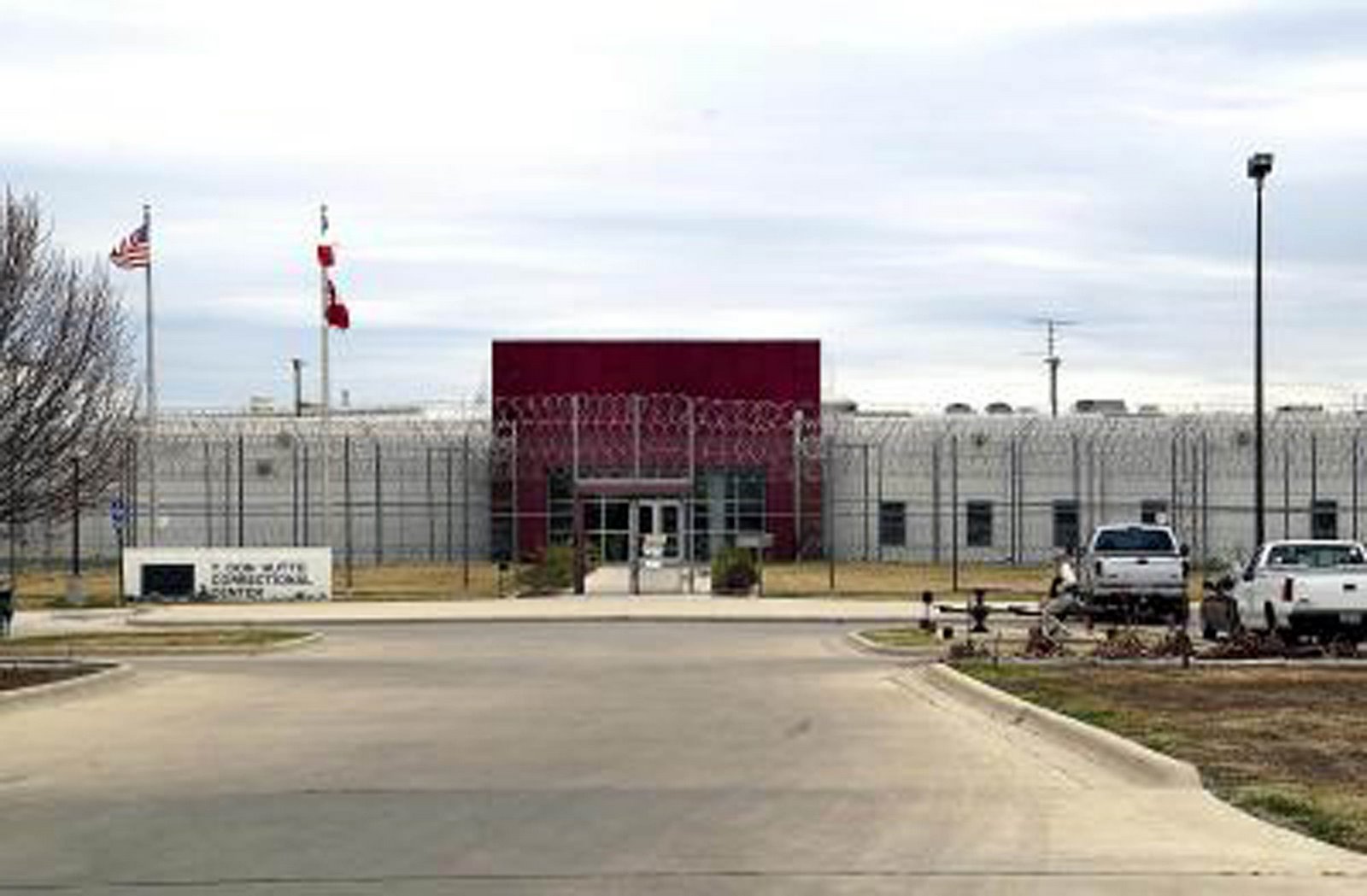
Many of the conditions mentioned in the column have not existed for some time. The razor-wire fence shown in the picture accompanying the column was removed more than a year ago. ICE has taken a proactive approach to enhancing the facility since it opened. Many of the improvements were in place, under way or planned before the lawsuit referred to in the column was filed.
--Marc J. Moore, field office director, U.S. Immigration and Customs Enforcement, San Antonio
Now take action!
Please take the time today, if possible, to write a letter to the Dallas Morning News stressing the inappropriate nature of family detention and Hutto. Letters can be sent using the site's online form, and should be 50-200 words in length. Letters can include the following points:
1) Detention of immigrant children and their families is inappropriate, costly, and inhumane. The experience at Hutto, a converted medium security prison operated by a private prison corporation where children as young as infants have been held with their parents, demonstrates that detention of families is a tragic response to the immigration issue. In addition, at an estimated cost of more than $200 a day per detainee at Hutto, the financial cost of such detention is unreasonably high, especially when more humane and cost-effective alternatives exist.
2) Congress has called on ICE to fund alternatives to family detention, saying that detention of immigrant children and their families should be the last alternative, not the first. ICE should be listening to the wishes of Congress and implementing alternatives to detention rather than soliciting new family detention centers. These alternative to detention programs are effective at ensuring that immigrants return to their immigration hearings and are much less costly than detention.
2) Congress has called on ICE to fund alternatives to family detention, saying that detention of immigrant children and their families should be the last alternative, not the first. ICE should be listening to the wishes of Congress and implementing alternatives to detention rather than soliciting new family detention centers. These alternative to detention programs are effective at ensuring that immigrants return to their immigration hearings and are much less costly than detention.
Thank you for your continued efforts to end family detention and close the T. Don Hutto detention center.


Monday, June 23, 2008
Locked and Loaded: CCA, the private jailer and one of Nashville's richest companies, is facing heightened scrutiny after a year of particularly heinou
Read the full article at Nashville Scene. Below are only the excerpts pertaining to Hutto.
by Matt Pulle
by Matt Pulle
Located in a bland, almost anonymous Green Hills office park of fake lakes and fountains is the headquarters of the nation's largest private prison company, which, at the moment, may be the most disparaged corporation in the country. Since its inception in 1983, CCA has encountered legions of angry detractors who believe that the business of punishing criminals should not be—well, a business. But if the company has become accustomed to criticism over the years—like a best-selling author whose novels garner predictably bad reviews—it is now mired in a series of scandals, embarrassments and public-relations catastrophes that may tar its reputation for years to come.
In the last 18 months alone, CCA has been the target of several stinging lawsuits supported by detailed affidavits and third-party reports alleging dangerous and inhumane practices that have put inmates' lives at risk. Whistle blowers, once in positions of trust at CCA, have emerged from the shadows to tell vivid tales of corporate misconduct. Federal authorities have castigated the publicly traded corporation for operating an immigration detention facility in Texas on the cheap. And at that CCA complex—which at one point forced children of immigrant detainees to dress in prison garb—dozens of incarcerated women and children have come forward with gut-wrenching tales of anguish and neglect.
...In 2005, Michael Chertoff, secretary of the Department of Homeland Security, which runs the Immigration and Customs Enforcement Division (ICE), ended the practice of "catch-and-release"—which permitted undocumented immigrants like Elsa to remain free at-large while they awaited their day in court. Under catch-and-release, no-shows were common. So after 9/11, the specter of illegal immigrants from all over the world roaming the country became a security issue. Pilot programs sprung up that tracked immigrants with electronic bracelets, though Chertoff went with a draconian plan instead: Throw many of these men, women and children in Hutto, a former medium-security prison that was surrounded by a 15-foot fence topped with rings of barbed wire when it reopened in 2006 as a place for immigrant families.
...Just about every affidavit from a child or mother portrayed Hutto the same way—as a rough and cold place, where kids lie awake at night hungry and crying in the dark. And if they act up, like children often do, a guard would threaten to remove them from their families. To hear the stories from inside the walls, Hutto seems more like a medieval dungeon than a 21st century facility run by a wealthy company.
"The conditions were shocking," says Barbara Hines, a University of Texas law professor who spent many hours inside the facility representing detainees. "There were children in prison garb dressed like their parents; it was like an adult prison system. Seven times a day parents and their children were required to stay in their pods so they could be counted. Laser beams shined through the cells at night."
Just about everyone else who walked through the gates at Hutto, including federal authorities, saw it as a deeply troubling facility. In March 2007, ICE inspectors visited Hutto and, in their own distinct bureaucratic language, corroborated the anguished accounts of the detainees. The inspectors noted that their "overall review of the facility can be accurately rated as deficient" and determined that the staff wasn't following basic standards of detention.
"The Review Team's observation of CCA's overall attitude is of disinterest and complacency in their work performance," the agency noted in its report.
A month later, an interoffice memo from ICE said that at Hutto, CCA is "losing staff as quick as they can hire them." That's because the company was only paying its detention officers around $10 an hour, nearly $4 less than what they could make at the county jail.
"As long as CCA continues to hire employees at this rate per hour, they will continue to experience the problems they are currently experiencing on the floor," read the memo. "The current problems CCA is experiencing are a direct result of what 'they are paying their employees for.' Unfortunately, it is at ICE's expense."
Among other issues, the Scene asked CCA to address the portrayal of Hutto that emerges from both federal officials and the people who lived there. The company declined to comment on any and all matters in this story, instead emailing news clips and a U.S. magistrate's report of the facility. That report, which came three months after the ACLU filed its federal lawsuit, depicted a more humane place than other earlier accounts and noted, "there have been attempts to 'soften' the feel of the building." The magistrate observed that the staff removed door locks and hung murals on the walls, "although the building still retains a very institutional feel."
...By all accounts, Hutto is no longer as oppressive as it was when Elsa and her family first arrived from Honduras. But why didn't CCA get it right from the start? Or to put it more bluntly, why did a rich company—one with $388 million in revenues last quarter—have to be told by the ACLU to cease treating innocent children like criminals?
"The point I'd like to make is that none of these changes were done voluntarily," says Hines, the attorney. "When you look at CCA and ICE, the question is, how would this facility have been if no one found out about it?"
Tuesday, May 27, 2008
More Information on ICE's New Family Detention Centers
Last week, we heard that ICE is soliciting bids for new family detention centers. From the look of it, the bid solicitation should implement ICE's new Family Residential Standards. We will continue to follow the bidding process and keep you updated on any decisions about new facilities. For now, here are some more details on what ICE would like the new centers to look like:
Exerpts from Solicitation Number HSCEDM-08-r-0005:
“This pre-solicitation is for the procurement of up to three (3) non-criminal family residential facilities with the capacity to house a maximum population of 200 residents each using minimal security for juveniles and their families in a safe and secure environment while in the custody of the Immigration & Customs Enforcement (ICE). It is expected families may be comprised of a ratio of up to three (3) juveniles to every one (1) adult….The facility is to be in a least restrictive, non-secure setting but must meet all state welfare laws and education requirements related to operating family shelter type facilities…. Additionally, program and services provided should be able to:
-meet state childcare licensing requirements and regulations (not necessarily licensed but licensable);
-adhere to all state and local building codes;
-adhere to all fire, health, and safety codes;
-provide suitable living accommodations for residents;
-provide for food, appropriate clothing, personal hygiene and grooming needs for residents;
-provide a "least restrictive" environment for families consisting of adults and minors of all ages who are detained on the premises;
-provide appropriate medical, mental health and dental care;
-provide emergency health care services including a complete medical examination for all juveniles within forty-eight (48) hours of admission (excluding weekends and holidays) and within fourteen (14) days for adults;
-administer appropriate immunizations to all juveniles;
-administer prescribed medicines to all residents;
-provide educational instruction for school aged juveniles in basic competencies as required by applicable state law (Monday through Friday);
-provide library services in languages other than English;
-provide both juveniles and adults recreational, leisure and acculturation activities and services;
-provide access to religious services;
-provide visitation with family and friends not residing at the facility;
-provide phone access;
-and securely maintain all case records as confidential.”
In addition to the official solicitation, the website includes guidance documents on building design, residential standards, quality monitoring and accountability, and staffing. Attachment 2 covers building design criteria, and is particularly interesting, given this blog’s concerns about the use of a former prison for family detention. The Master Plan gives 2 sample layouts for family residential facilities, a “campus” and a “single-building plan.”
The campus model is “more rural than urban,” organized around “a centralized quad or green space.” In addition, the administration building, through which visitors and detainees enter the facility, should be “non-institutional, warm, welcoming and incorporate such features as a gabled or sloped roof for a more residential style/appeal.” The residental buildings should be arranged as follows:
“The two resident living units should be located such that the front doors of the units open onto the quad/green space. The educational and indoor recreational program buildings also face onto the quad/green space and are easily accessible to the resident living units…. The site should provide numerous open/green space areas for both large and small group recreational and educational program opportunities to take place. Fenced-in play areas for toddlers are located directly adjacent to the living units, allowing for parent supervision. Soccer, volleyball and basketball areas should be nearby but separated from the living units. The main quad shall also provide small group gathering areas for the residents to gather or for staff to utilize for different program services.” (pg. 8)
The single building plan contains the same basic components as the campus plan, but in a single building, with green space around the building. This plan is “more conducive to an urban site.” This building is organized as follows:
“A centralized interior circulation spine acts as the organizer to which the components of the [facility] are attached. The administrative functions are located near the front entry to the site. The appearance of the administration building should be non-institutional, warm, welcoming and incorporate such features as a gabled or sloped roof for a more residential style/appeal. The resident living units are located along the main circulation spine and surround a common outdoor activity/program service area. All of the resident services functions are also located along the main circulation spine, each having a designated entry or “store front” appearance, similar to a mall concept. The location of these functions will allow for easy access by residents. The services located along the main spine include recreational and educational programs, resident services, visitation, health services, library and dining…. The site provides numerous open/green space areas for both large and small group recreational and educational program opportunities to take place. Fenced in play areas for toddlers are located directly adjacent to the living units, allowing for parent supervision, while the soccer, volleyball and basketball areas are nearby, but separate from the living units.” (pg. 9)
Stay tuned for updates on the bidding process!
Subscribe to:
Posts (Atom)