.jpg)
Monday, August 31, 2009
Saturday, August 22, 2009
Houston Solidarity with Aug. 22 Rally; Aug. 29 Rally in Houston Announced
Estimados companeros en la lucha y Human Rights Advocates:
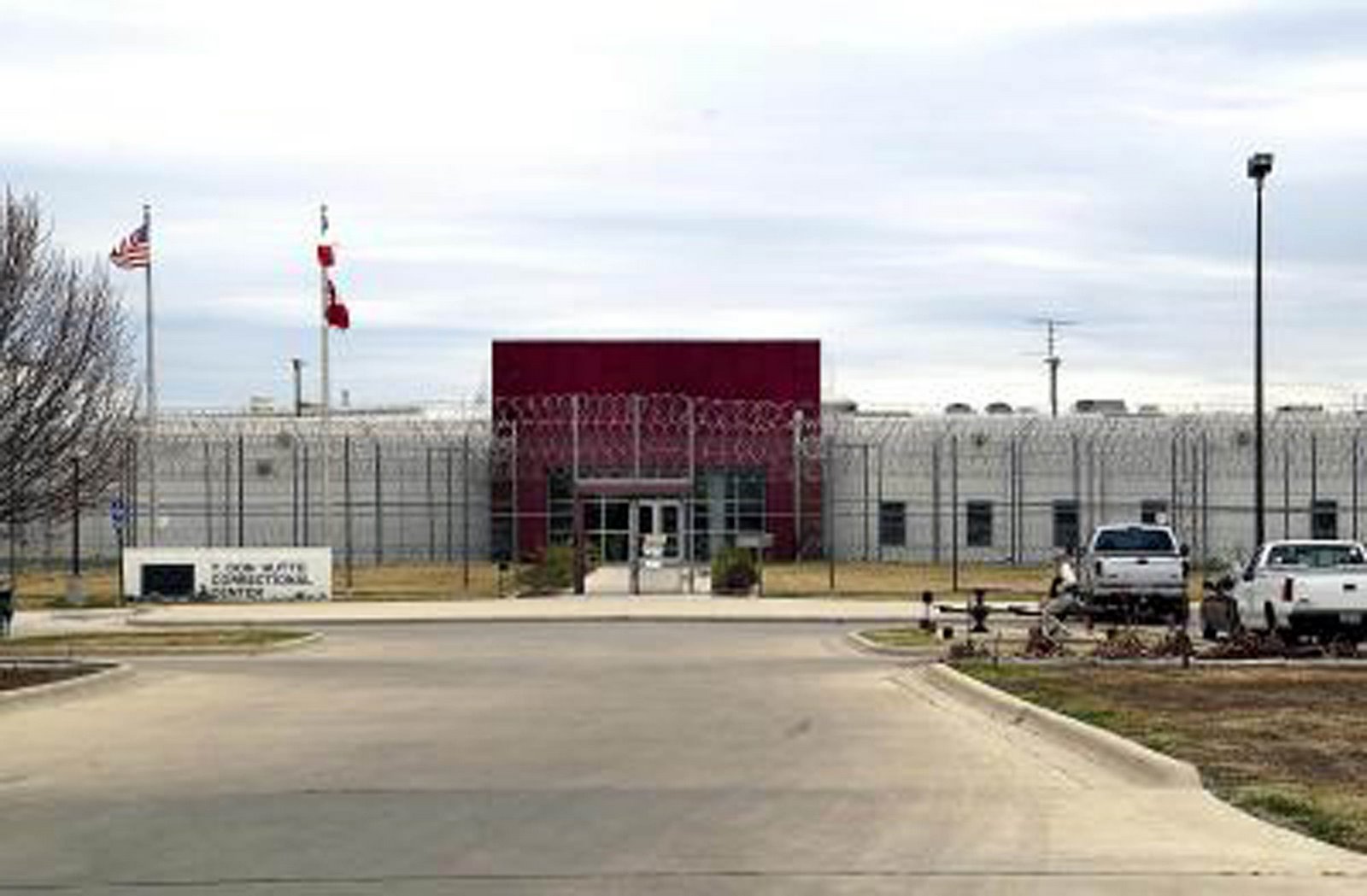
The "Free-the-Kids Hutto-Houston Colectiva" fully supports ongoing efforts to CLOSE THE INFAMOUS T.DON HUTTO "FAMILY PRISON," in Taylor, Texas.
And we call for both "CELEBRACION Y MAS ACCION" regarding a key victory in the struggle for immigrants rights and for protecting democratic rights in the United States.
Even though few, if any, Hutto-Houston Colectiva advocates can get to the Aug 22nd Vigil and Rally in Taylor, Texas, please know that we are doing our part in mobilizing Houston rights' advocates and youth for the:
What: Aug 29th "Celebration & Mobilization" Rally
Where: at James Driver Park (basketball court), at 10918 and 1/2 Bentley St., in northeast Houston, (near Hwy 59, Eastex, and Little York Rd)
When: Saturday, Aug 29, 2009; 4:30 pm -6:30 pm.
The Hutto-Houston Colectiva, in collaboration with La Raza Justice Movement and other organizations invites you to join us at the Aug 29th celebration/mobilization rally. Bring your banners, energy, musica & ideas.
Colectiva's participant groups and organizers are committed to the goal of CLOSING
DOWN the T.DON HUTTO "MOMMY" prison and to push for fair IMMIGRATION
& PRISON REFORM.
We are also calling for a moratorium on family detentions, a halt to deportations, no border wall, and for the American people to STOP 287(g) which is re-channeling federal funds into the financing of local jail, county and state prison facilities through "racial profiling" and through the prosecution and jailing of immigrant workers for small infractions.
For more info on the Aug 29th rally call:
Hutto-Houston Colectiva at: 832 244 7506;
La Raza Justice Movement at: 281-733-8463
The "Free-the-Kids Hutto-Houston Colectiva" fully supports ongoing efforts to CLOSE THE INFAMOUS T.DON HUTTO "FAMILY PRISON," in Taylor, Texas.
And we call for both "CELEBRACION Y MAS ACCION" regarding a key victory in the struggle for immigrants rights and for protecting democratic rights in the United States.
Even though few, if any, Hutto-Houston Colectiva advocates can get to the Aug 22nd Vigil and Rally in Taylor, Texas, please know that we are doing our part in mobilizing Houston rights' advocates and youth for the:
What: Aug 29th "Celebration & Mobilization" Rally
Where: at James Driver Park (basketball court), at 10918 and 1/2 Bentley St., in northeast Houston, (near Hwy 59, Eastex, and Little York Rd)
When: Saturday, Aug 29, 2009; 4:30 pm -6:30 pm.
The Hutto-Houston Colectiva, in collaboration with La Raza Justice Movement and other organizations invites you to join us at the Aug 29th celebration/mobilization rally. Bring your banners, energy, musica & ideas.
Colectiva's participant groups and organizers are committed to the goal of CLOSING
DOWN the T.DON HUTTO "MOMMY" prison and to push for fair IMMIGRATION
& PRISON REFORM.
We are also calling for a moratorium on family detentions, a halt to deportations, no border wall, and for the American people to STOP 287(g) which is re-channeling federal funds into the financing of local jail, county and state prison facilities through "racial profiling" and through the prosecution and jailing of immigrant workers for small infractions.
For more info on the Aug 29th rally call:
Hutto-Houston Colectiva at: 832 244 7506;
La Raza Justice Movement at: 281-733-8463


Friday, August 21, 2009
Berks County Considering End of Family Detention Contract
Those of us seeking an end to family detention might welcome this news, but there's an insidious subtext to this discussion: county governments and private prisons corporations alike seek to profit on the imprisonment of human beings. That is, there is a monetary incentive to expanding imprisonment and detention that has nothing to do with making good policy, fighting crime, or enforcing immigration law. When there's an incentive to imprison, the goals of our criminal justice and immigration detention systems are grossly out of perspective.
Berks County may stop housing illegal aliens
Shutting family center would cost 50 jobs; county doesn't profit from running Bern facility
By Holly Herman
Reading Eagle
While federal officials are planning to move families seeking American citizenship from a Texas detention center that is closing to a Berks County shelter, the county commissioners are considering getting out of the alien-housing business.
The Family Center in Bern Township is the only other facility in the country that houses families awaiting hearings or the results of hearings on requests to stay in the U.S.
But with tight economic times, the Berks County commissioners may end up closing the Bern Township center, which opened in 2001.
So far, no definite plans have been made to shut down the 84-bed center housing detained immigrant families captured at the borders and in other places.
Closing the facility would mean the loss of 50 county jobs, officials said.
But the county isn't profiting from the money the U.S. Immigration and Customs Enforcement service pays the county for housing the detainees .
"At the initial stages we were permitted to make a profit, but now we are breaking even on it," Commissioner Chairman Mark C. Scott said. "We have been helpful to the federal government for a decade.
"Everything is on the table in terms of cost cutting. We are in the process of shrinking county government," Scott said.
The center, which generates more than $3 million in income annually for the county, costs $5.6 million a year to operate.
It's' paid for by the federal government and staffed by the county.
ICE officials said the 512-bed T. Don Hutto Family Residential Facility in Taylor, Texas, is expected to close in December.
ICE has been reviewing cases of 127 men, women and children residing in the facility since plans to close it were disclosed on Aug. 6.
"We are working on a case-by-case basis to determine if the families will be moved to Berks," said ICE spokeswoman Gillian M. Brigham.
So far, no detainees have been sent to Berks from the Texas facility.
Brigham said that some families will go through the immigration legal proceedings and be deported.
She said others might be released into the community to await hearings. Some of the families are seeking citizenship, some want asylum. ICE hearings will establish their legal status. Others are awaiting deportation.
Brigham said the bulk of illegal immigrants come to this country alone.
The goal of the shelter program, when it started in 2001, was to keep families together while they are being detained.
Kenneth C. Borkey Jr., executive director of the Berks shelter, said ICE officials notified him of the planned move but have not requested additional bed space.
Borkey said he has prepared a report on the availability of additional space if such a request is made.
Borkey said the center could be expanded to include 12 to 18 beds without additional renovations.
When the Berks center opened in March 2001, the federal government was paying the county $3.6 million for housing families in a renovated wing of Berks Heim, the county nursing home.
The county paid $280,000 for the renovations.
In 2004, new federal regulations prohibited governmental agencies from making a profit by providing service programs.
Subsequently, the county is no longer profiting from providing the services.
The county is receiving $144,000 to rent office space to federal employees using the program.
Scott, who was a commissioner when the program started, said that initially the program was a money maker.
"When we started this program, we were helping the federal government," he said. "Before this program, they were spending more money on housing families in hotels."
Scott said that he supports helping the federal government, but is more concerned about the economic impact on the county.
"It's our patriotic duty to help the federal government," he said. "But it's not a financial boon. Do we continue to tolerate this moving forward? The question we must consider is whether we can find another tenant."
Commissioner Kevin S. Barnhardt said he does not support expanding the program.
"We are talking about whether we want to continue the program," he said. "When the federal government said it was considering transferring people to Berks, it was a shock."
Barnhardt said the downside to closing the program is losing county jobs.
Commissioner Christian Y. Leinbach said that if the county were losing money on this it would be his priority to cut the program.
"We are breaking even," he said. "There are no plans to shut it down, but we are looking at it from a financial point of view."
The facility provides computer linkup services with immigration courts in York County.
The shelter provides medical and dental care. And it provides education classes and athletic activities for children.
Berks County was selected as the site in 2000 because of its excellent working relationship with the federal government when it was housing illegal aliens in the county jail.
That program is being phased out because of overcrowding conditions in the county prison.
Contact Holly Herman: 610-478-6291 or hherman@readingeagle.com
USA Today, Raul Reyes: A kindler gentler immigration system?
A kinder, gentler immigration system?
Commentary By Raul Reyes
This country's immigration detention system has been a stain on the American fabric. The good news: The stain may soon begin to fade.
Immigration and Customs Enforcement (ICE) Assistant Secretary John Morton recently announced plans to reform the system that houses more than 30,000 people on any given day. The agency wants to go from a jail-oriented approach — think prisons — to one designed to humanely house people until their status is settled.
The T. Don Hutto center in Taylor, Texas, has been a poster child for a broken system. Built as a state prison, Hutto was used as a family detention center. Children lived behind barbed wire, wore prison uniforms and received an hour of school a day. The American Civil Liberties Union filed a lawsuit against the government on their behalf, and conditions improved once a settlement was reached in 2007. ICE's Morton said that effective immediately, no more families will be sent to Hutto.
Of course ICE could — and should — do more. Detainee facilities that violate agency standards face no penalties, echoing a July decision by the Department of Homeland Security that such standards are not legally enforceable. Without penalties, standards are mere goals that can be easily disregarded. Detainees are the only ones who stand to pay.
Repeated studies have documented poor conditions, ranging from a lack of due process to detainee abuses. Fortunately, an ICE pilot program is looking at alternatives to detention, such as electronic monitoring that includes reporting requirements and curfews. According to agency statistics, the program has resulted in a 99% appearance rate at immigration hearings and a 91% compliance with removal orders in the 12 test cities. An expansion seems like a no-brainer.
ICE's small steps are a good start toward fixing the detention system, which is as dysfunctional as our immigration system. And no, this doesn't mean opening up our borders, as the anti-immigrant crowd might fear. "We are going to continue to detain people on a large scale," ICE's Morton noted. As strategy, though, continued and aggressive enforcement could give the Obama administration the leverage it needs to sell comprehensive reform to a wary public next year.
With Homeland Security Secretary Janet Napolitano on the job for all of eight months now, it's only fair to give her more time to assess what's needed to enforce our immigration laws. Let's hope the former Arizona governor applies her knowledge of the border to the compassionate fabric of this great country.
Oh, and maybe she'll get that stain out after all.
Raul Reyes is an attorney in New York and a member of USA TODAY's board of contributors.
Sunday, August 16, 2009
The Economist: When Home Is Prison
The venerable neoliberal rag, the Economist, covered changes in US immigration detention policy, as well, though it mostly summarizes previous reports/posts. Correction, however: Napolitano has NOT scaled by immigration enforcement compared to Chertoff. Instead, she has expanded the 287(g) program, which allows local police to enforce immigration law, to a host of new cities, many of them in Texas. 287(g) has been discredited as institutionalized racial profiling.
WHEN HOME IS PRISON
Aug 13th 2009
Slow improvements in the processing of immigrants
...
[Janet Napolitano's] department has already made changes. The administration has scaled back the workplace raids that were so controversial during the Bush
years. It is opting instead to focus on auditing employers and
expanding E-Verify, an electronic system that lets employers check the
immigration status of potential employees.
But the biggest shift concerns family detention. In 2006 George Bush
said he would end a policy known as "catch and release", whereby
illegal immigrants were allowed to go free after being caught because
so many of them failed to turn up for subsequent court proceedings. But
detaining children and families proved more delicate than holding lone
adults. Later that year, Immigration and Customs Enforcement (ICE)
opened a facility specifically for families in Taylor, a small town
north of Austin.
The T. Don Hutto Family Residential Centre was formerly a
medium-security prison. In its new incarnation it is still run by the
Corrections Corporation of America, a private prison company. And
inside, Hutto used to be just like a jail. Barbara Hines, director of
the Immigration Clinic at the University of Texas's law school, says
that she was shocked when she started visiting: children were wearing
prison uniforms and the parents were depressed and desperate. Everyone
was cooped up in cells for most of the day, and the children had only
an hour or so of lessons.
In March 2007 the Immigration Clinic and the American Civil Liberties
Union sued Michael Chertoff, then the head of the Department of
Homeland Security, over the conditions at Hutto. In August that year
the parties settled, with the government agreeing to a list of reforms.
That agreement was set to expire later this month, but on August 6th
ICE announced an overhaul of America's approach to detention. As
immediate steps, the government would put monitors in many of the adult
facilities, and immediately stop detaining families at Hutto.
The announcement raises questions. For one thing, it is not clear
where the families are going to go. ICE said that it would move them to
the Berks Family Residential Centre in Pennsylvania, but that facility
is full. And although Berks is somewhat nicer than Hutto,
immigrants'-rights groups are still sceptical about keeping children in
detention at all.
Planning large-scale reform next year may still be too ambitious: it is
an election year, which makes politicians even more skittish about
controversy. But some reform advocates are more optimistic: at least,
reckons Charles Foster, an immigration lawyer in Houston, immigration
reform is still on the agenda.
Friday, August 14, 2009
 Apologies for using jpgs, but the Williamson County Sun does not public online, and Blogger doesn't allow pdfs. If you click on the individual images, they will appear in a new window in an enlarged, more readable size.


Thursday, August 13, 2009
Austin-American Statesman: Grassroots Movement Helped End Family Detention at Hutto

The alliance of attorneys, grassroots organizers, and a diverse coalition of outraged Texans from across the state has been getting some much-deserved kudos in the press. Check out this Austin-American Statesman article on how it all came together (and about how sometimes it didn't, which is okay, too). There were hundreds more involved than are mentioned by name-- if you're one of them, your hard work has been recognized!
T. Don Hutto detention center united diverse group in protest
Group's efforts helped lead to an overhaul of nation's immigrant detention policies.
By Juan Castillo
AMERICAN-STATESMAN STAFF
Thursday, August 13, 2009
When she first set foot in the T. Don Hutto immigrant detention center in Taylor shortly after it opened in 2006, Frances Valdez was not prepared for what she saw behind the former medium-security prison's razor-wire-ringed perimeter. There were children inside. Infants in prison-like uniforms, and pregnant women.
"It was shocking," Valdez said.
A recent graduate of the University of Texas School of Law, Valdez immediately called her mentor, Barbara Hines, the director of the school's immigration clinic where the young Austin lawyer was a clinical fellow.
"You're not going to believe this," Valdez told Hines — a bold assertion considering that with more than three decades of experience working on immigration law issues, Hines had probably seen it all.
But Valdez was right, Hines said
recently, recalling with still-heavy emotion the things she witnessed on her own visit to the Hutto center a week later that August.
"Just thinking about it takes me back to that place," Hines said. "It was so dire. It was the most depressed population I think I've ever seen."
Last week, three years and three months after the Hutto detention center opened, the Obama administration announced it will stop holding families there as it looks for alternatives to prison cells for some immigration law violators as part of an overhaul of the nation's immigration detention system.
The policy shift might not have been possible, according to some analysts, if not for the work of an unlikely but effective patchwork alliance of attorneys and community activists that emerged after Hines' and Valdez's unsettling initial visits to the Hutto center. The partnership quickly mushroomed to include hundreds, if not thousands, of people, including twenty-somethings and senior citizens, Williamson County residents, immigration reform advocates, human rights groups, documentary filmmakers, immigration clinic students and faculty and the American Civil Liberties Union. Though participants say they were not always on the same page, they were unified in their unrelenting calls for the government to close the center and to stop detaining families there.
They succeeded in drawing national and international media attention to the center as well as the scrutiny of international human rights groups. And in 2007, a lawsuit by the ACLU and Hines' UT law clinic led to a settlement agreement ordering the government to maintain improved conditions at the detention facility, about 30 miles northeast of Austin. (Set to expire later this month, the agreement was extended last week.)
"I think all of that (work by activists and attorneys) led to getting the new administration to understand that Hutto was an entirely inappropriate place to hold families," said Michelle Brané with the New York-based Women's Refugee Commission and author of its scathing 2007 report on family detention. "The reason they realized that is because we were able to inform them of what was going on there and explain why it was inappropriate."
Hines said the alliance was an "amazing experience" that showed how lawyers and activists, though sometimes at odds, could ultimately work together.
"Fundamentally, there was something about Hutto that really tugged at people's heartstrings," said Bob Libal with the grass-roots coalition Texans United for Families, which helped organize dozens of vigils and rallies outside the Hutto center's fences beginning in late 2006. "There were children there, and I think that makes people question the whole premise behind detention."
Detaining families
Those locked up at Hutto — in roughly 10-foot-by-10-foot cells — hail from all over the world and are seeking asylum or are being held on what the government defines as administrative, noncriminal violations of immigration law.
Only one other facility in the country — the Berks Family Shelter Care Facility in Leesport, Pa. — detains immigrant families. Those being detained in Taylor will be transferred by the end of the year to Berks, which will remain open pending further reforms, officials announced last week.
The decision to detain families was part of a 2006 Bush administration policy that ended a long-standing practice called "catch and release," under which immigrants promised to appear before a judge at a later date when there weren't enough beds to hold them.
Officials said mandatory detention was necessary because many families skipped their immigration hearings. They said detention was a safe, humane way to deal with families and keep them together.
But the Hutto center quickly came under fire amid a lengthy list of accusations of inhumane, substandard care and living conditions, among them that families were denied adequate diets, education, recreation, and medical and mental health care. Children initially received only one hour of education a day. Valdez and Hines said that in the beginning, parents were denied private meetings with counsel, meaning that many had to describe fleeing sexual abuse, imprisonment or torture in their home countries while in the presence of their young children.
Brané, who visited the center in December 2006, said parents told her that guards frequently threatened to separate them from their children if they didn't behave.
Amid the outcry, and as activists began steadily beating the drum for the center's closure, government officials expanded education and recreation and implemented other improvements early in 2007. But attorneys and activists continued arguing that imprisoning families, who in many cases were fleeing persecution in their home countries, was traumatic for the children and that there were plenty of alternatives to detention. Last week, government officials said they would consider alternatives, such as supervised release and the use of ankle bracelets, for some families.
Joining forces
Soon after the 2006 visits of Valdez and Hines, immigration law clinic students began providing representation to families held at the center.
Hines said they decided early on to enlist the help of activists to get the word out. By December 2006, community activists had helped organize the first of dozens of candlelight vigils at the center. Valdez said that even though only about 30 people attended the first vigil, "that's when it blew up." Soon, media representatives from around the world were calling about the lockup in Texas that held children and families, some for several months at a time. Refugee and human rights groups began descending on Taylor or monitoring developments there.
Valdez, who now practices immigration law in Houston, said that under their growing relationship, attorneys — the only ones who had access inside the center — typically described to activists the conditions and developments there. All used that information to consider their strategy in the campaign to close the center.
But the informal partnership was occasionally tinged with difficulty. Sometimes, activists wanted to know more than the attorneys could share because of attorney-client privilege, Hines said.
"We had to say, 'This is what I can tell you and you just have to trust me,' " Valdez recalled.
Activists had to learn to accept that while they were advocating a cause, attorneys were representing the best interests of their clients, said MaryEllen Kersch, a former Georgetown mayor who attended many of the vigils and organized a public forum on family detention. Kersch said that though she understood it was best for the plaintiffs, the settlement in the 2007 lawsuit that accused the government of violating the rights of minors at the center disappointed her.
"From a reformer's point of view, it sort of took the heat off the issue and gave what was being done (at Hutto) a little bit of a cover of acceptability," Kersch said.
She said diverse groups never lost sight of their overarching goal. "We all agreed on one thing: that T. Don Hutto needed to stop putting kids in prison."
jcastillo@statesman.com; 445-3635
Monday, August 10, 2009
ACLU: Hutto Settlement Extended
ACLU Strikes Deal To Continue Humane Conditions At Hutto Detention Center
(8/7/2009; Updated 8/10/2009)
Agreement Will Remain In Place Until All Families Have Been Released
FOR IMMEDIATE RELEASE
CONTACT: (212) 549-2666; media@aclu.org
NEW YORK – The American Civil Liberties Union and Immigration and Customs Enforcement (ICE) officials today struck a deal to extend an agreement requiring ICE to maintain improvements in the conditions at the T. Don Hutto family detention center in Texas and submit to external oversight until the last family is released from the facility.
The deal comes on the heels of an announcement Thursday that the government will immediately begin ending the detention of families at Hutto, the focus of 2007 lawsuits filed by the ACLU charging that children were being illegally imprisoned under inhumane conditions. The last family is expected to be released from Hutto no later than the end of the year.
"No young child should ever have to endure imprisonment in an adult prison," said Vanita Gupta, staff attorney with the ACLU Racial Justice Program and a lead attorney in the Hutto litigation. "Now that the long-overdue decision has been made to end the detention of families at Hutto, the government is to be commended for wanting to ensure that the improvements in the facility's conditions that have been made during the past two years remain in place until there are no families left there."
The ACLU's lawsuits were filed on behalf of 26 immigrant children between the ages of one and 17 detained with their parents who, in almost all cases, were seeking asylum. A settlement agreement reached several months after the lawsuits were filed mandates, among a number of other things, that children be given expanded educational programming and increased recreation time outdoors. The agreement was set to expire August 29.
The decision to end family detention at Hutto was made as part of a broad government plan to improve the immigration detention system. According to the plan, officials will work to consolidate many detainees in facilities with conditions that reflect their status as non-criminals, establish more centralized authority over the system and create more direct oversight of detention centers.
The plan also calls for ICE to stop sending families to Hutto, and to relocate the remaining 127 detainees there. Some will be transferred to an 84-bed facility in Pennsylvania, while others will be considered for programs that do not require detention, such as home and electronic monitoring.
Attorneys involved in the Hutto litigation include Gupta of the ACLU's Racial Justice Program; Judy Rabinovitz of the ACLU's Immigrants' Rights Project; Lisa Graybill of the ACLU Foundation of Texas; and Barbara Hines of the University of Texas School of Law Immigration Clinic.
A copy of the stipulation is available online.
Additional information about the ACLU's Hutto litigation is available online at.
(8/7/2009; Updated 8/10/2009)
Agreement Will Remain In Place Until All Families Have Been Released
FOR IMMEDIATE RELEASE
CONTACT: (212) 549-2666; media@aclu.org
NEW YORK – The American Civil Liberties Union and Immigration and Customs Enforcement (ICE) officials today struck a deal to extend an agreement requiring ICE to maintain improvements in the conditions at the T. Don Hutto family detention center in Texas and submit to external oversight until the last family is released from the facility.
The deal comes on the heels of an announcement Thursday that the government will immediately begin ending the detention of families at Hutto, the focus of 2007 lawsuits filed by the ACLU charging that children were being illegally imprisoned under inhumane conditions. The last family is expected to be released from Hutto no later than the end of the year.
"No young child should ever have to endure imprisonment in an adult prison," said Vanita Gupta, staff attorney with the ACLU Racial Justice Program and a lead attorney in the Hutto litigation. "Now that the long-overdue decision has been made to end the detention of families at Hutto, the government is to be commended for wanting to ensure that the improvements in the facility's conditions that have been made during the past two years remain in place until there are no families left there."
The ACLU's lawsuits were filed on behalf of 26 immigrant children between the ages of one and 17 detained with their parents who, in almost all cases, were seeking asylum. A settlement agreement reached several months after the lawsuits were filed mandates, among a number of other things, that children be given expanded educational programming and increased recreation time outdoors. The agreement was set to expire August 29.
The decision to end family detention at Hutto was made as part of a broad government plan to improve the immigration detention system. According to the plan, officials will work to consolidate many detainees in facilities with conditions that reflect their status as non-criminals, establish more centralized authority over the system and create more direct oversight of detention centers.
The plan also calls for ICE to stop sending families to Hutto, and to relocate the remaining 127 detainees there. Some will be transferred to an 84-bed facility in Pennsylvania, while others will be considered for programs that do not require detention, such as home and electronic monitoring.
Attorneys involved in the Hutto litigation include Gupta of the ACLU's Racial Justice Program; Judy Rabinovitz of the ACLU's Immigrants' Rights Project; Lisa Graybill of the ACLU Foundation of Texas; and Barbara Hines of the University of Texas School of Law Immigration Clinic.
A copy of the stipulation is available online.
Additional information about the ACLU's Hutto litigation is available online at.
Friday, August 7, 2009
Michelle Brané: Good News on Immigration Detention But Keeping the Pressure On
We're blogging our fingers off, but here's an excellent post from long-time family and child advocate, Michelle Brané, posted at the Huffington Post:
Immigration and Customs Enforcement's (ICE) announcement this week that they will stop detaining families at the T. Don Hutto Residential Center in Taylor, Texas, is terrific news. When I first visited the facility, which is a former prison, in December of 2006 I was shocked at what I saw -- kids getting only one hour of school a day, terribly inadequate medical care, insufficient time to eat, and, worst of all, inappropriately severe discipline. (See my report: Locking Up Family Values: The Detention of Immigrant Families.)
The facility was part of the Bush administration's plan to end what they called "catch and release." That administration gave the impression that families were swarming across the border and that smugglers were using babies as "mules" to prevent the detention of their clients. But they were never able to fill Hutto and they never to my knowledge identified a trafficked child through the new process.
What I saw at the facility were families -- mostly women, many of them pregnant, most with very young children -- who were fleeing to the United States for protection. The trek north through the desert is extremely dangerous and difficult. Many die on the journey. This is not a trip you make with your young children unless you are desperate. It also doesn't make sense to bring your toddler with you if you sole intention is to work illegally. It was clear from speaking with these women that they had real fears and valid claims to asylum.
But at Hutto they were treated as criminals, and their children were punished as well. Families slept in actual jail cells -- with prison cots and toilets in the cells. Children had some toys in the common areas but were not allowed to take anything into their cells at night. One family told me about a six-year-old child who cried when a prison guard told him he could not take the picture he had drawn into his cell. The guard yelled at him for crying, and the child's father tried to intervene. As punishment, the child and his father were separated -- to different wings of the facility -- for three days!
Following our report and the ensuing media attention and an ALCU lawsuit, the facility underwent improvements -- including providing education for the children, recreation opportunities, freedom of movement -- but family detention standards that were implemented are entirely inappropriate and still do not address issues of discipline and common decency. I couldn't be happier that families will no longer be placed in this facility. And the administration's decision is a clear indication that they are taking steps in the right direction.
I am worried though. Because the administration has made it clear that they will continue to detain families at another facility I have visited many times. The Berks County Family Shelter Care facility in Leesburg, Pennsylvania. That facility is not as blatantly disturbing as Hutto. It is a former nursing home -- not a prison. But the term "shelter" is still misleading. In 2006, I met families that had been detained there for two years. Children over five are separated from their parents at night. The same sort of disciplinary issues I mentioned above exist at Berks, too. The administration has indicated that they will be looking into alternatives to detention. I hope they mean it and I hope they do it quickly.
Advocates for immigrant rights are losing patience. The administration has been reviewing the system for six months and saying that they understand that the current criminal model of immigration detention is inappropriate for civil detainees. But they have also made it clear in statements and through their actions that they will continue aggressive enforcement operations and that they expect the detained population to grow. That means that some 440,000 immigrants and asylum-seekers are expected to be detained in the U.S. this year. We need to be realistic. We need immigration reform and that has to come from Congress.
Our current laws are unforgiving and unrealistic. We also need to be patient and give the administration time to overhaul a detention system that is a mess. I am not saying we should give them a free pass -- but my interaction with ICE headquarters since the change in administration has been positive. I think they are sincere in their desire to make the system more humane. We have no choice. We have to take a big of a leap of faith -- both sides, and work together. We can still hold them accountable -- especially if we don't see improvement. The announcement to stop using Hutto for families is the administration's attempt to show us they mean it and are trying. The former administration had been planning to increase family detention space with a request for proposals for up to three new facilities. This week, we went from fearing an increase to a cut in family bed space of 75 percent. That is pretty good.
The Obama administration has a lot more work to do to demonstrate that they mean what they say. For now, we have to trust that and do what we can to help them implement change while still holding them accountable.
CCA's response...
From Business of Detention:
CCA Welcomes Fed’s New Immigrant Detention Strategy
On the heels of Immigration and Custom Enforcement’s announcement that it will stop holding children in Corrections Corporation of America’s T. Don Hutto Detention Center, the company assured investors that they still expect plenty of business from the federal government. “In some respects there may not have been much of a change,” said Damon Hininger, CCA’s President and Chief Operating Officer during a conference call on Thursday with investors.
Hininger said CCA had “just learned yesterday that ICE wants us to renegotiate” the Hutto contract and that a timetable for the negotiations had not been set for transitioning Hutto to hold female immigrants. But he pointed to the Obama administration’s expansion of the Bush administration’s Secure Communities program as proof that demand for immigrant detention beds would continue.
Other highlights from the 2nd quarterly earnings report of the nation’s largest private prison provider:Watch for a more detailed update next week from BusinessofDetention.com!
- Revenues increased 5.7%, and average per diem rates are up 2.3%
- Inmate populations were larger than expected at U.S. Marshall’s facilities - likely from the ongoing Operation Streamline along parts of the U.S.-Mexico border in Arizona and Texas
- During the next quarter CCA expects the commencement of a new 20-year contract with ICE to detain immigrants in a 502-bed former county jail that it just finished renovating in Hall County, Georgia
Berks County Family Center full
The Reading Eagle reports that Berks County officials were unaware of ICE's policy change, and have no room for families transferred from Texas:
Practically speaking, it seems preferable to release families on bond, parole, and recognizance and as their claims are processed through immigration courts.
Most families detained at Hutto and Berks are asylum-seeking, and are therefore eligible for various forms of release. In fact, detaining refugees and asylum-seekers in prison-like conditions is generally considered bad policy and against international law, as this can re-traumatize people fleeing persecution, abuse, violence, and torture.
Federal officials announced Thursday that they were closing a detention center for immigrant families in Texas and sending the detained families to the Berks Family Shelter Care Facility in the former Berks Heim.No word yet on whether Hutto's families will, indeed, be transferred or whether ICE will allow the detained family population to shrink gradually.
But nobody told Berks County. And the Berks facility is full.
County Commissioner Kevin S. Barnhardt, who is chairman of the county prison board, said he was unaware of the move by the Immigration and Customs Enforcement agency.
Kenneth A. Borkey Jr., executive director of the Bern Township facility, which houses families awaiting immigration hearings, said the center is at capacity.
Immigration officials could not be reached for comment.
In the announcement, they said the closing of the 512-bed T. Don Hutto Family Residential Facility in Taylor, Texas, was the first step in shifting illegal-immigration cases from the criminal to the civil court system.
Officials said they would send detained families to the Berks facility until it was filled and then develop alternative programs, such as supervised release, to monitor families awaiting deportation hearings.
Borkey said he was drafting a memo with the bad news for the immigration agency.
"We have an 84-bed capacity and we are at capacity," Borkey said.
Borkey said he planned to notify county commissioners and consult with immigration officials about reconfiguring the building to make room for more detainee families.
The county, which signed a contract with ICE that became effective Thursday, is reimbursed $197 a day per individual.
Borkey said news of the Texas closing rattled his employees, who feared their jobs also might be in jeopardy.
"At this time the county has not been informed of any changes to our program," Borkey said.
Practically speaking, it seems preferable to release families on bond, parole, and recognizance and as their claims are processed through immigration courts.
Most families detained at Hutto and Berks are asylum-seeking, and are therefore eligible for various forms of release. In fact, detaining refugees and asylum-seekers in prison-like conditions is generally considered bad policy and against international law, as this can re-traumatize people fleeing persecution, abuse, violence, and torture.
What about Berks?
The numerous reports highlighting the transfer of families from Hutto to Berks have brought attention to this rather under-publicized family residential facility, and I thought I'd provide some information about Berks. (The Reading Eagle reports, however, that the Berks Family Shelter Care Center is full. See previous post.)
Berks was opened in March of 2001, as an extension of Berks County's contract with then-INS' juvenile detention program. It is located on a large tract of land in Bernville Township that holds a number of county services: recycling, water treatment, an elderly care facility, a prison, a youth corrections center, a juvenile detention center, a community college, and an agricultural center.
The family detention center is located in an old nursing home, built in the 1950s. Still called Berks Heim by locals, the facility was a state of the art residence for elderly folks that required specialized care. Built as a residence, rather than a prison, Berks has been held up as an alternative to T Don Hutto. Licensed by the state of Pennsylvania and run according to child welfar principles, Berks has not been subject to the same media or legal attention as Hutto.
But as the Women's Refugee Commission's Michell Brané pointed out in Locking up Family Values, Berks is far from perfect. In response to ICE's policy change, Brané maintains: "While conditions there were not as shocking as those at Hutto, they are not appropriate. For example, children over five, are separated from their parents at night. We believe that families should not be detained unless absolutely necessary and only for an extremely short period of time.” (See the Women's Commissions full press release here.)
Both the ACLU and the Women's Commission (as well as others) have argued the authority structure of detention is harmful to families, since it strips parents of their role as arbiters of the family unit. While much of the attention has been focused on the conditions of detention, people often forget the effects any institutional environment will have on the less tangible--but fundamental--relationships between parents and children.
Mentioned even less often is how institutionalization effects relationships between parents, since their contact is highly constrained. Married couples cannot, for example, sleep together nor show affection towards each other. These kinds of relationships require some degree of privacy, which is difficult to balance with security and authority structures inherent to institutional custody.
There is no research on this, but as human beings, we can expect that compiling the stress of filing and pursuing claims with an inability to care for each other in familiar ways will have long terms effects on family relationships. This points to the larger question, which Brané has repeated asked, about the suitability detaining any families at all.
Berks was opened in March of 2001, as an extension of Berks County's contract with then-INS' juvenile detention program. It is located on a large tract of land in Bernville Township that holds a number of county services: recycling, water treatment, an elderly care facility, a prison, a youth corrections center, a juvenile detention center, a community college, and an agricultural center.
The family detention center is located in an old nursing home, built in the 1950s. Still called Berks Heim by locals, the facility was a state of the art residence for elderly folks that required specialized care. Built as a residence, rather than a prison, Berks has been held up as an alternative to T Don Hutto. Licensed by the state of Pennsylvania and run according to child welfar principles, Berks has not been subject to the same media or legal attention as Hutto.
But as the Women's Refugee Commission's Michell Brané pointed out in Locking up Family Values, Berks is far from perfect. In response to ICE's policy change, Brané maintains: "While conditions there were not as shocking as those at Hutto, they are not appropriate. For example, children over five, are separated from their parents at night. We believe that families should not be detained unless absolutely necessary and only for an extremely short period of time.” (See the Women's Commissions full press release here.)
Both the ACLU and the Women's Commission (as well as others) have argued the authority structure of detention is harmful to families, since it strips parents of their role as arbiters of the family unit. While much of the attention has been focused on the conditions of detention, people often forget the effects any institutional environment will have on the less tangible--but fundamental--relationships between parents and children.
Mentioned even less often is how institutionalization effects relationships between parents, since their contact is highly constrained. Married couples cannot, for example, sleep together nor show affection towards each other. These kinds of relationships require some degree of privacy, which is difficult to balance with security and authority structures inherent to institutional custody.
There is no research on this, but as human beings, we can expect that compiling the stress of filing and pursuing claims with an inability to care for each other in familiar ways will have long terms effects on family relationships. This points to the larger question, which Brané has repeated asked, about the suitability detaining any families at all.
What will happen to the families at Hutto?
Many have been asking us what will happen to the families currently detained at Hutto. According to the Philadelphia Inquirer,
Morton said the process of transferring families from Texas to Pennsylvania would begin immediately.ICE is not ending family detention policy, but is making use of the more humane of the two facilities and a range of non-detention forms of custody. Despite what critics have argued, this is not a "catch and release" policy, but more like a "catch and follow" policy. Families can expect to be required to call ICE at daily, weekly, or other regular intervals, to have ICE officers visit them at home or work, to be assigned electronic monitoring ankle bracelets, and other forms of supervision. Bond and parole may be used more widely, as well, which requires that families post $4-10,000 for each adult (less for children) to guarantee court appearance.
"For the immediate future we will use Berks to its capacity," Morton said. To the extent that ICE needs more capacity for families, he said, the agency would explore alternatives to detention, including supervised release and electronic monitoring with ankle bracelets.
More News Coverage
Google found 791 articles reporting on ICE' changes to family and immigrant detention policy, but here are just a few. For the most part, we're all waiting for more information. Family detention at Hutto may be ending, but we have few details about how the rampant problems in the detention system as a whole will be addressed. For now, here are some words...
From Houston Chronicle: ICE will revamp detainee system, policy of using converted prisons to hold families of illegal immigrants is on its way out
From the LA Times: Obama aims to overhaul immigration jail system
From Houston Chronicle: ICE will revamp detainee system, policy of using converted prisons to hold families of illegal immigrants is on its way out
Three years ago, immigrant families sent to a Central Texas immigration detention center found themselves at a converted prison rimmed in razor wire. Child inmates slept with their parents in cells monitored by lasers, stood still for daily head counts and donned navy detention uniforms available in sizes as small as infant onesies. They reported getting only one hour of school a day and going weeks without playing in the sun.From the San Antonio Express-News: Detention overhaul hits Austin area site
As word spread about conditions for families at the T. Don Hutto Family Residential Facility, critics pointed to the former medium-security prison as being emblematic of problems associated with the Bush administration's immigration detention practices. ...
The detention centers have been sharply criticized in recent years amid reports of substandard medical care, detainee deaths and poor access to attorneys. Morton said the system will be revamped to get away from a penal detention model that relies heavily on contracts with correctional facilities and private industry. Within the next three to five years, he said, the agency aims to use facilities designed, located and operated specifically for immigration purposes.
“What we're trying to do is design a system that reflects the unique civil detention authorities that we're exercising,” Morton said. “The population that we detain is different than the population that is detained in a traditional prison or jail setting.” ...
Barbara Hines, an attorney who oversees the University of Texas immigration law clinic and was one of the first nonprofit attorneys to visit the Hutto facility, praised ICE's addition of monitors to oversee daily operations at larger immigration facilities.
“Having ICE monitors in prisons is a good step forward because I think in the last couple years, the expansion of detention has gotten out of control, leading to deaths and a lack of medical care,” Hines said. “But I don't think ICE is capable of policing itself.” ...
Morton stressed that ICE is not shying away from immigration detention in general. “We are going to continue to detain people, and we are going to continue to detain people on a large scale,” he said.
Several years ago, the Bush administration hailed the 512-bed Hutto facility as a model center, which was operated under contract by Corrections Corp. of America.
However, a federal lawsuit filed by the American Civil Liberties Union forced the Bush administration to make improvements to the former state prison and to make it more family-friendly.
But civil rights groups and immigrant advocacy organizations continued to call conditions at the Texas center deplorable.
“Ending family detention at Hutto is extremely welcome and long overdue,” said Joanne Lin, ACLU legislative counsel.
The ACLU said it would continue to push for reform of the immigration detention system to ensure detainees are given access to due process and not inappropriately locked up for prolonged periods of time.
[what your representatives REALLY think] Congressional Republicans, meanwhile, questioned whether the detention system changes would be a return to the controversial catch-and-release system that was ended by the creation of the detention facilities under the Bush administration.
Alternatives to detention, like supervised release and catch-and-release programs, for immigrants scheduled to be deported do not work, said Rep. Lamar Smith, R-San Antonio and the ranking Republican on the House Judiciary Committee, which oversees immigration law.
“I hope that the Obama administration will not repeat past mistakes and return to a policy that puts more illegal immigrants on the streets of American communities,” Smith said.
From the LA Times: Obama aims to overhaul immigration jail system
Pledging more oversight and accountability, the Obama administration announced plans Thursday to transform the nation's immigration detention system from one reliant on a scattered network of local jails and private prisons to a centralized one designed specifically for civil detainees.
The reforms are aimed at establishing greater control over a system that houses about 33,000 detainees a day and that has been sharply criticized as having unsafe and inhumane conditions and as lacking the medical care that may have prevented many of the 90 deaths that have occurred since 2003. ...
Immigrant rights advocates welcomed the changes but said there was still no clear policy on how detention facilities would be penalized if problems were found.
"We are encouraged that the administration is taking a hard look at what has traditionally been a dark spot in our immigration system," said Karen Tumlin, a staff attorney at the Los Angeles-based National Immigration Law Center. "However, only time will tell if the reforms announced today amount to lasting change or simply creative repackaging of prior policies."
Tumlin and others said the detention standards needed to be made legally binding to guarantee immigrants access to counseling, family visits, legal materials and recreation time. Legislation has been introduced aimed at accomplishing this.
Advocates also said that the government should use less punitive and less costly alternatives to detention, such as ankle bracelets or intensive supervision, for certain immigrants.
"We are very disappointed by the failure to discuss alternatives to detention in the proposal," said Ahilan Arulanantham, an attorney at the American Civil Liberties Union of Southern California. "The system now detains thousands of people who are not a danger and not a flight risk."
To increase oversight, the immigration agency would place federal monitors in 23 large facilities, which house more than 40% of the detainees. The agency also plans to hire experts in healthcare administration and detention management, and someone to review medical complaints.
"We need a system that is open, transparent and accountable," Morton said.
A crackdown on illegal immigrants under the George W. Bush administration led to a dramatic increase in the detainee population, from 19,700 in fiscal year 2006 to 33,400 today. The budget for detention and deportation is nearly $2.5 billion, much of which is spent on contracts with private prison companies such as Corrections Corp. of America.
Morton said the agency did not plan to reduce the number of detainees or stop contracting with local governments and private corporations. But he said his staff would assess where detainees should be housed.
He said that many -- including some asylum seekers and those without criminal records waiting to be deported -- should be in facilities less restrictive than jails and prisons.
Thursday, August 6, 2009
Austin-America Statesman: Hutto to cease detaining families
Report: Government plans to stop sending families to Taylor detention center
T. Don Hutto would be converted to facility for immigrant women, Obama Administration official says.
COMPILED FROM STAFF AND WIRE REPORTS
Thursday, August 06, 2009
The Obama administration plans to announce today that the government will stop sending families to the T. Don Hutto Residential Center in Taylor — where families are held while they await adjudication of their immigration cases — as part of an overhaul of the nation's immigration detention system, The New York Times reported.
Details of the overall plan are sketchy, and even the first steps will take months or years to complete, the newspaper reported.
The plan includes reviewing the federal government's contracts with more than 350 local jails and private prisons, with an eye toward consolidating many detainees in places more suitable for noncriminals facing deportation — some possibly in centers built and run by the government.
But the government would take immediate action on Hutto, a 512-bed center run for profit by the Corrections Corp. of America under a $2.8-million-a-month federal contract.
The facility was a centerpiece of the Bush administration's approach to immigration enforcement when it opened in 2006. The decision to stop sending families there — and to set aside plans for three more family detention centers — is the Obama administration's clearest departure from its predecessor's immigration enforcement policies, the newspaper said.
Dan Kowalski, an Austin immigration attorney who represents a woman formerly housed at the Hutto facility in Taylor, welcomed the announcement.
"I'm happy to hear it. My only question is, 'What are they going to do with the people that they would have sent to Hutto?' " he said.
John Morton, who heads the Immigration and Customs Enforcement agency as assistant secretary of homeland security, told The New York Times on Wednesday that Hutto will be converted into an immigration jail for women. He said that he hasn't ruled out the possibility of detaining families but that the Berks Family Shelter Care Facility, an 84-bed former nursing home in Leesport, Pa., is a better facility for those detainees.
Reached by phone Wednesday evening, Williamson County Judge Dan A. Gattis' first reaction was, "Good. My quote is: Good."
The facility has drawn unwanted attention to Williamson County. Opponents including the American Civil Liberties Union have lobbied Congress and held protests urging that the facility be closed, and citizens have spoken against it before county commissioners.
The University of Texas School of Law's Immigration Clinic and the ACLU of Texas won a settlement in a federal suit that accused the government of violating the rights of minors held at the center.
The 2007 settlement agreement ordered enforceable standards at the center, including requirements that families be able to spend an unlimited time together in their rooms with the door open from 8 a.m. to 8 p.m., eliminating scheduled head counts and ordered five hours of schooling per day for children, among other things. That agreement was scheduled to expire Aug. 29.
"We're happy that the administration is taking a look at its policies on family detention," said Jose Medina, a spokesman for the ACLU of Texas. "We're eagerly waiting to see what the details are. But this is clearly a positive development."
Gattis said the administration's move would take the pressure off the county, which he described as acting as a middle man between the federal government and Corrections Corp. of America. Williamson County receives about $15,800 a month under its latest 2-year contract with the company, which commissioners voted to renew in December.
"I've always said, whatever (the federal government's) policy is, we're here to help," he said. "It's really their policy, not ours."
The new policy, according to The New York Times, aims to establish more centralized authority over the detention system, which holds about 400,000 immigration detainees over the course of a year, and more direct oversight of detention centers.
The number detained at Hutto has dropped sharply, to 127 individuals from as many as 450, the newspaper said.
Additional material from staff writers Miguel Liscano and Andrea Lorenz
T. Don Hutto would be converted to facility for immigrant women, Obama Administration official says.
COMPILED FROM STAFF AND WIRE REPORTS
Thursday, August 06, 2009
The Obama administration plans to announce today that the government will stop sending families to the T. Don Hutto Residential Center in Taylor — where families are held while they await adjudication of their immigration cases — as part of an overhaul of the nation's immigration detention system, The New York Times reported.
Details of the overall plan are sketchy, and even the first steps will take months or years to complete, the newspaper reported.
The plan includes reviewing the federal government's contracts with more than 350 local jails and private prisons, with an eye toward consolidating many detainees in places more suitable for noncriminals facing deportation — some possibly in centers built and run by the government.
But the government would take immediate action on Hutto, a 512-bed center run for profit by the Corrections Corp. of America under a $2.8-million-a-month federal contract.
The facility was a centerpiece of the Bush administration's approach to immigration enforcement when it opened in 2006. The decision to stop sending families there — and to set aside plans for three more family detention centers — is the Obama administration's clearest departure from its predecessor's immigration enforcement policies, the newspaper said.
Dan Kowalski, an Austin immigration attorney who represents a woman formerly housed at the Hutto facility in Taylor, welcomed the announcement.
"I'm happy to hear it. My only question is, 'What are they going to do with the people that they would have sent to Hutto?' " he said.
John Morton, who heads the Immigration and Customs Enforcement agency as assistant secretary of homeland security, told The New York Times on Wednesday that Hutto will be converted into an immigration jail for women. He said that he hasn't ruled out the possibility of detaining families but that the Berks Family Shelter Care Facility, an 84-bed former nursing home in Leesport, Pa., is a better facility for those detainees.
Reached by phone Wednesday evening, Williamson County Judge Dan A. Gattis' first reaction was, "Good. My quote is: Good."
The facility has drawn unwanted attention to Williamson County. Opponents including the American Civil Liberties Union have lobbied Congress and held protests urging that the facility be closed, and citizens have spoken against it before county commissioners.
The University of Texas School of Law's Immigration Clinic and the ACLU of Texas won a settlement in a federal suit that accused the government of violating the rights of minors held at the center.
The 2007 settlement agreement ordered enforceable standards at the center, including requirements that families be able to spend an unlimited time together in their rooms with the door open from 8 a.m. to 8 p.m., eliminating scheduled head counts and ordered five hours of schooling per day for children, among other things. That agreement was scheduled to expire Aug. 29.
"We're happy that the administration is taking a look at its policies on family detention," said Jose Medina, a spokesman for the ACLU of Texas. "We're eagerly waiting to see what the details are. But this is clearly a positive development."
Gattis said the administration's move would take the pressure off the county, which he described as acting as a middle man between the federal government and Corrections Corp. of America. Williamson County receives about $15,800 a month under its latest 2-year contract with the company, which commissioners voted to renew in December.
"I've always said, whatever (the federal government's) policy is, we're here to help," he said. "It's really their policy, not ours."
The new policy, according to The New York Times, aims to establish more centralized authority over the detention system, which holds about 400,000 immigration detainees over the course of a year, and more direct oversight of detention centers.
The number detained at Hutto has dropped sharply, to 127 individuals from as many as 450, the newspaper said.
Additional material from staff writers Miguel Liscano and Andrea Lorenz
Subscribe to:
Posts (Atom)